
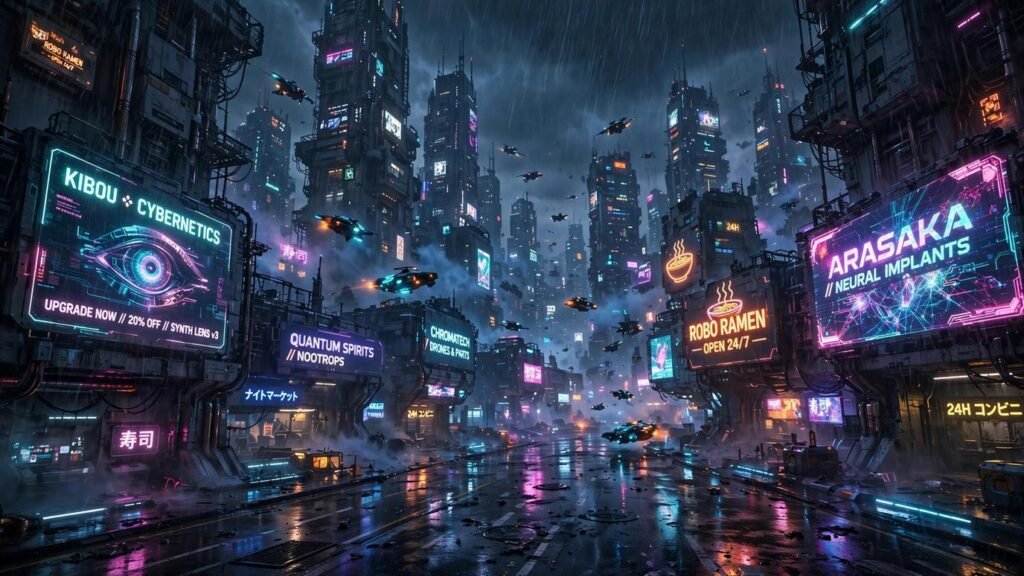
Few sequels arrive with as much weight on their shoulders as Blade Runner 2049 did in 2017. It had to follow a film that is routinely named one of the greatest science fiction movies ever made, satisfy a fanbase that had spent 35 years arguing about the original’s ending, and somehow work as a story in its own right. And against every odd — a 163-minute runtime, a bleak tone, and marketing that refused to spoil its own mystery — Denis Villeneuve’s film pulled it off, earning an 88% score from both critics and audiences on Rotten Tomatoes and winning Academy Awards for its cinematography and visual effects.
This guide is a complete deep dive: what the film is about, how the plot unfolds, who the characters are, the themes it wrestles with, the real technology it imagines, and how it was actually made. There are spoilers ahead — the film is nearly a decade old, and its ending deserves honest discussion. With Blade Runner 2099 premiering on Prime Video on November 25, 2026, there has never been a better time to understand why this film matters.
The short answer: Blade Runner 2049 is Denis Villeneuve’s 2017 sequel to Ridley Scott’s Blade Runner (1982). A replicant police officer named K discovers that a replicant once gave birth — something thought impossible — and his investigation into the child leads him to Rick Deckard, who has been missing for 30 years. It’s a slow, visually stunning meditation on identity, memory, and what makes a person human, wrapped in a detective story.
What Is Blade Runner 2049 About?
At its core, the film is a mystery. It’s the year 2049, and the Los Angeles Police Department employs replicants — bioengineered synthetic humans — to hunt down older, rogue replicant models in a job known as “blade running.” Officer K (Ryan Gosling), whose serial number is KD6-3.7, is one of these replicant blade runners. He is loyal, obedient, and regularly tested to prove he hasn’t developed unapproved emotions.
On a routine “retirement” — the polite term for killing — of an older-model replicant named Sapper Morton (Dave Bautista), who has been living quietly as a protein farmer, K stumbles on something buried under a tree on the farm: a box containing the remains of a female replicant. The medical analysis reveals something that should be impossible — she died during a caesarean section. A replicant gave birth.
His superior, Lt. Joshi (Robin Wright), understands immediately why this is dangerous. Replicants are a manufactured slave class. If the world learns that replicants can reproduce biologically, the delicate balance between humans and replicants could collapse into war. She orders K to find the child and destroy every trace of the truth. But K’s investigation leads somewhere she never expected: to Rick Deckard, the legendary blade runner who vanished thirty years ago — and to a personal revelation that forces K to question everything about who he is.
How Does the Story Continue From the Original Blade Runner?
You don’t need a film degree to follow 2049, but a quick refresher on where the story began helps a lot.
The original film in thirty seconds
Ridley Scott’s Blade Runner (1982), loosely adapted from Philip K. Dick’s 1968 novel Do Androids Dream of Electric Sheep?, was set in a rain-soaked Los Angeles in November 2019. Rick Deckard (Harrison Ford), a burned-out cop, was pulled back into service to “retire” four advanced Nexus-6 replicants — Roy Batty, Pris, Zhora and Leon — who had escaped the off-world colonies and returned to Earth. The film’s famous ambiguity: the audience was never told definitively whether Deckard himself was a replicant.
The thirty-year gap
Blade Runner 2049 picks up in a world shaped by two catastrophes in the intervening years. A global event called the Blackout — a massive data wipe — destroyed most digital records, which is why characters still carry paper files and use physical evidence. And the Tyrell Corporation, the company that built the replicants, collapsed after its founder’s death. In its place rose the Wallace Corporation, run by the blind, messianic Niander Wallace (Jared Leto), which produces a new generation of replicants engineered to obey.
The franchise also released three short films in 2017 that fill in some of this history — 2022: Black Out, 2036: Nexus Dawn, and 2048: Nowhere to Run — but the movie itself gives you everything you need.
Who Are the Main Characters?
The film has a relatively small core cast, but each character carries real thematic weight:
- K (Ryan Gosling) — A Nexus-9 replicant and LAPD blade runner. His job is to kill older replicants, and he does it without complaint — until his investigation makes him hope, for the first time, that his own memories might be real.
- Rick Deckard (Harrison Ford) — The former blade runner from the original film, now living in isolation among the ruins of Las Vegas. Ford’s performance is weary, guarded, and quietly devastating.
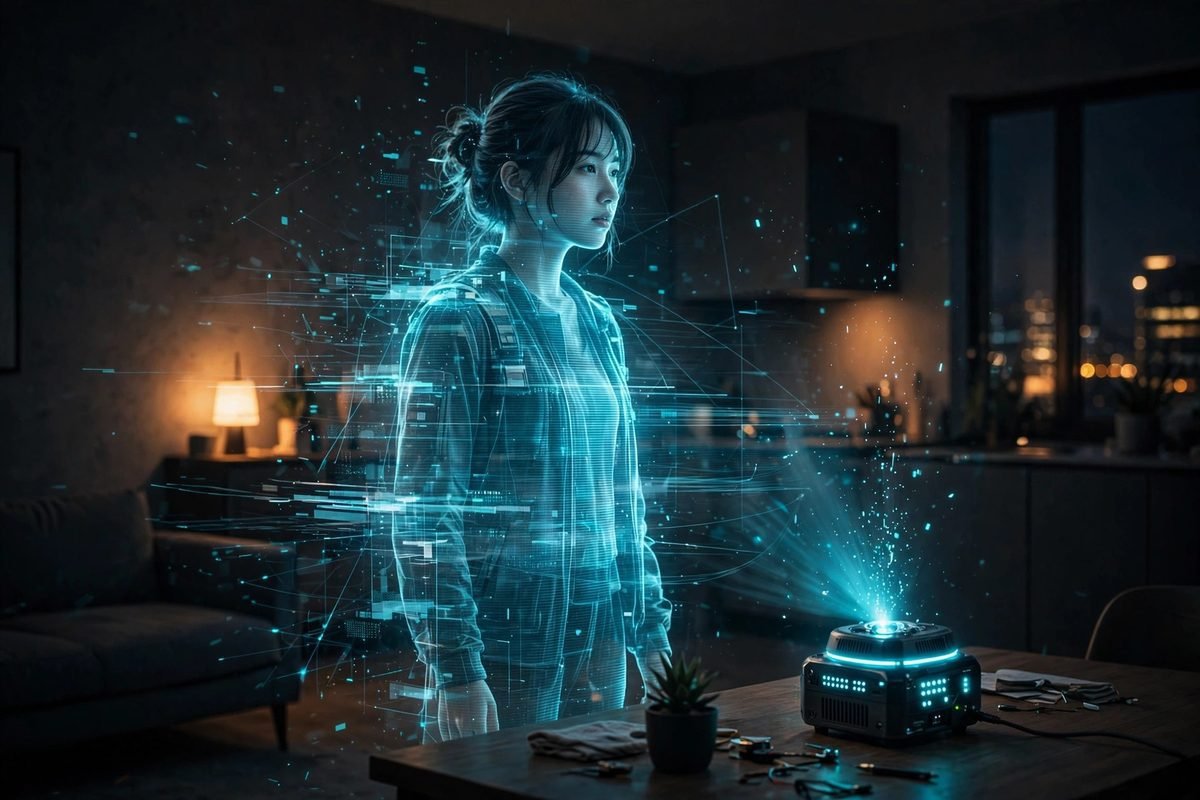
- Joi (Ana de Armas) — K’s holographic AI companion, a commercial product he buys an “emanator” upgrade for so she can move around the physical world. She is one of the film’s most discussed characters.
- Niander Wallace (Jared Leto) — The blind CEO of the Wallace Corporation. He views replicant reproduction as the key to expanding human colonization of the stars — and everyone else as raw material.
- Luv (Sylvia Hoeks) — Wallace’s replicant enforcer: loyal, terrifyingly efficient, and chillingly emotional at the moments that matter most.
- Lt. Joshi (Robin Wright) — K’s commanding officer, pragmatic to the point of ruthlessness about keeping the peace.
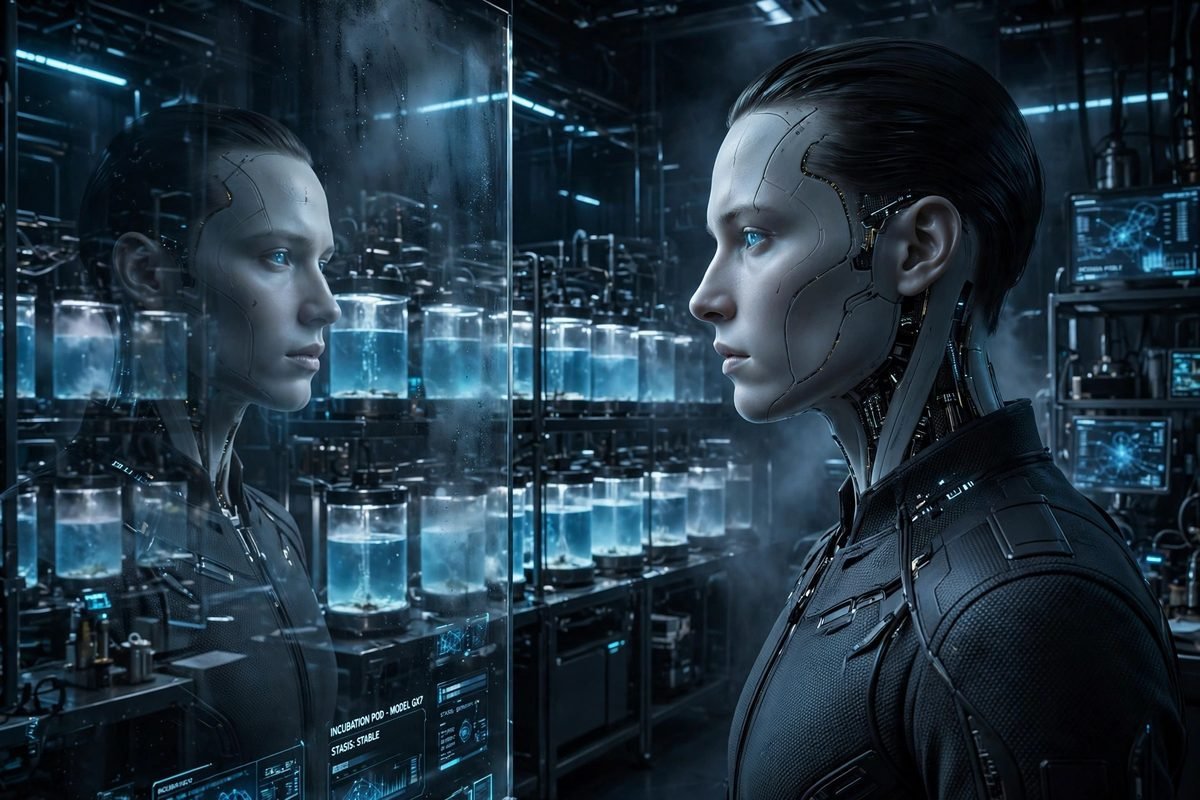
- Dr. Ana Stelline (Carla Juri) — A reclusive “memory designer” who creates artificial memories for replicants, living in a sterile laboratory bubble because of a compromised immune system.
- Supporting players — Dave Bautista’s Sapper Morton, Mackenzie Davis as Mariette (a replicant sex worker who doubles as an informant), Lennie James as the gruff archivist Mr. Cotton, and Barkhad Abdi’s fixer Doc Badger. Sean Young also appears as Rachael, the replicant from the original film, recreated with digital effects.
What Happens in the Story? (Plot Summary With Spoilers)
The buried box
K’s investigation begins at Sapper Morton’s farm. The remains in the buried box are identified through surviving DNA archives as an experimental Nexus-7 replicant — Rachael, the replicant who fell in love with Deckard in the original film. She died giving birth. This means Deckard had a child with a replicant, and that child is now roughly thirty years old.
Two pursuits, one child
Lt. Joshi orders K to find the child and retire it quietly. Separately, Niander Wallace learns of the discovery and wants the opposite: the child alive, because understanding how replicants reproduced would let him manufacture them endlessly — solving his labor shortage for off-world colonies. He sends Luv to shadow K’s investigation and take whatever K finds.
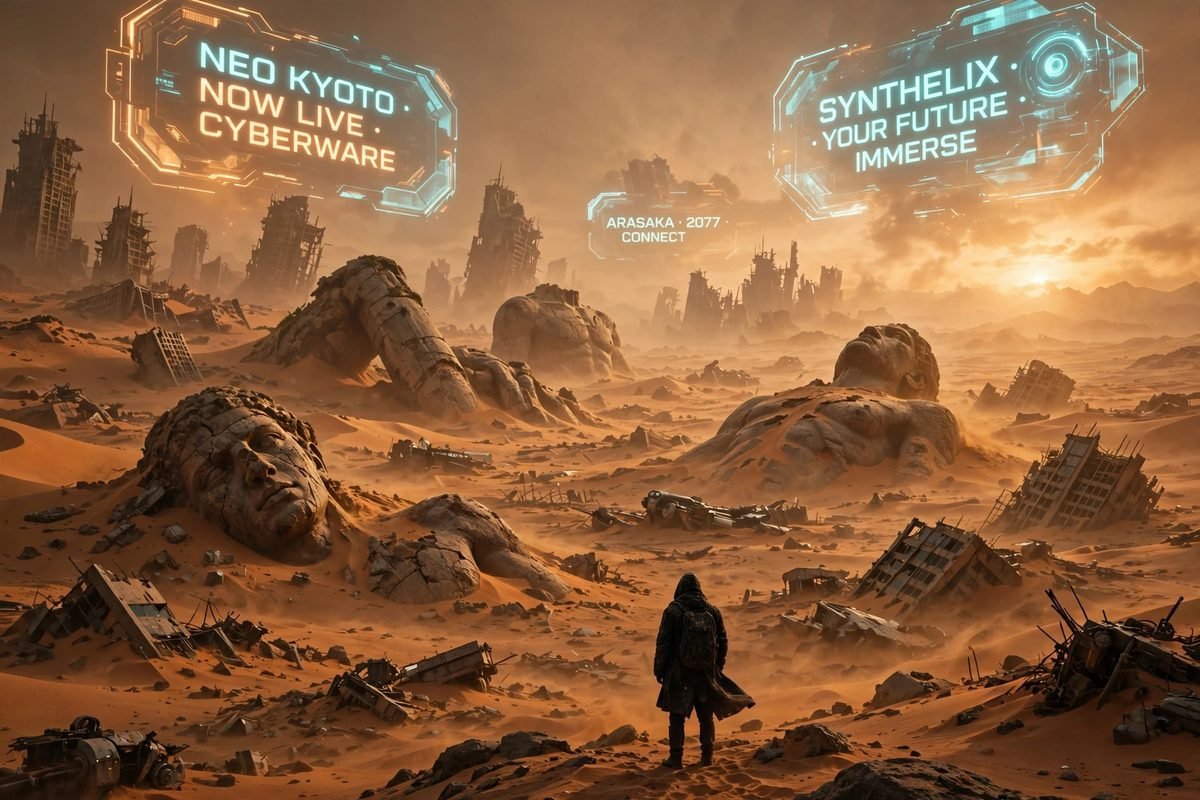
K follows the trail through the surviving records: a memory-designer named Dr. Ana Stelline, an orphanage in a ruined city, and eventually a radioactive, deserted Las Vegas — visually one of the film’s most striking sequences, shot in deep orange haze with giant decayed holograms of Elvis Presley and Marilyn Monroe still flickering in the ruins. There, in an abandoned casino hotel, he finds Deckard.
The twist: the memory
The film’s emotional centerpiece is a childhood memory K has carried all his life: hiding a small wooden horse from a group of orphanage bullies. Because replicants receive implanted memories, K has always believed his memories were someone else’s — but the investigation makes him suspect the impossible: that he is Rachael’s child, the miracle baby everyone is hunting.
He confronts Dr. Stelline about it, and she confirms that his memory is real — planted in him by whoever designed it. But the cruel, brilliant twist: the memory is real because it is hers. Stelline is the child. Someone implanted her genuine childhood memory into K’s mind as a safeguard, a breadcrumb hidden in plain sight. K is not the miracle child. He is ordinary — just another replicant who briefly believed he was special.
Why Is the Ending So Powerful?
In the final act, after being left for dead in a fight with Luv (who kills Joshi and destroys K’s holographic companion Joi), K is rescued by Freysa (Hiam Abbass) and the replicant resistance. He chooses to defy everyone — Joshi’s orders, Wallace’s scheme, even the resistance’s plan to kill Deckard — and instead takes a wounded Deckard to Stelline’s laboratory, reuniting father and daughter for the first time.
Then K, mortally wounded, lies down on the steps outside the laboratory as snow begins to fall — the first snow he has ever seen — and dies quietly while the score weaves in the melody from the original film’s “Tears in Rain” scene. It’s the opposite of a chosen-one ending: K’s final act has nothing to do with being special. He does something human — an act of love for someone else — and the film argues that is what makes a person real, not the circumstances of their birth.
What Are the Big Themes of Blade Runner 2049?
The film is philosophically dense without ever lecturing. Its major themes include:
Artificial intelligence and personhood
Joi is a product — an advertising slogan in the film even calls her “everything you want to hear.” Yet she appears to genuinely love K, and the film refuses to resolve whether her feelings are real or sophisticated programming. It’s the sharpest version of the AI question the original film asked about replicants, and it lands uncomfortably close to real debates about today’s AI companions.
Memory and identity
Every replicant carries implanted memories designed by artists like Dr. Stelline. If your memories are manufactured, are you still you? K’s arc argues that identity isn’t found in where you come from — it’s built from the choices you make.
Parenthood and birth
The original film asked whether artificial beings could be human. The sequel asks whether they can be parents — and what a replicant child would mean for a society built on the premise that replicants are property. The birth of Rachael’s daughter is called a “miracle” for a reason.
Ecology and decay
2049’s Earth is a triage state: protein farms because real animals are nearly extinct, seawalls holding back the ocean, radioactive exclusion zones, snow falling on Los Angeles. The world isn’t a sleek future — it’s a civilization doing maintenance on a dying planet.
What Real Technology Does Blade Runner 2049 Explore?
For an astronomy and science audience, the film’s technology is half the fun. Several of its ideas map onto genuine research directions:
- Holographic AI companions (Joi) — Today we have voice assistants and increasingly convincing AI companions, but nothing approaching a fully interactive, emotionally responsive holographic person. The film asks the question researchers are already grappling with: what happens when the companion feels real to the user?
- Bioengineered humans (replicants) — Full synthetic humans remain science fiction, but the underlying questions — about manufactured biology, engineered obedience, and the ethics of creating sentient labor — connect directly to real debates in genetics and bioethics.
- Memory implants — Neuroscience is making early, real progress on understanding how memories form and how they might be influenced or restored, though implanted false memories of the film’s precision are far beyond current science.
- Environmental collapse engineering — Seawalls, synthetic food production, and climate-adapted infrastructure are already serious engineering fields. The film just shows them after society has lost.
How Was Blade Runner 2049 Made?
The production facts are almost as impressive as the film:
- Director: Denis Villeneuve, coming off Arrival (2016), with Ridley Scott serving as executive producer.
- Screenplay: Hampton Fancher (who co-wrote the original) and Michael Green, from a story by Fancher.
- Cinematography: Roger Deakins, who finally won his first Academy Award for Best Cinematography after 14 nominations — for this film.
- Score: Hans Zimmer and Benjamin Wallfisch, replacing the originally attached Jóhann Jóhannsson during post-production. The score deliberately echoes Vangelis’s original 1982 synthesizer sound.
- Filming: Principal photography took place mostly on soundstages in Budapest, Hungary, from July to November 2016. Villeneuve has said that over 90% of the sets were physically built — the scale of the Las Vegas ruins and the Wallace Corporation headquarters is largely real construction, not green screen.
- Visual approach: Deakins shot the film with a deliberate, patient camera. There are very few cuts by modern blockbuster standards, which is why the 163-minute runtime feels like a slow dream rather than an action film. Ridley Scott himself later suggested the film was at least 30 minutes too long — a criticism fans and critics have debated ever since.
Villeneuve described the production as “the most expensive art house movie in cinema history” — a self-aware nod to the fact that he made a meditative, slow-burn drama with a budget of $150–185 million.
Did Blade Runner 2049 Win Awards?
Yes — though its commercial performance told a different story. The key facts:
- Academy Awards: 5 nominations, 2 wins — Best Cinematography (Roger Deakins) and Best Visual Effects. Deakins’s win was his first after 14 nominations, and one of the most celebrated moments of the ceremony.
- BAFTA Awards: 8 nominations, 2 wins — Best Cinematography and Best Special Visual Effects.
- Critical reception: 88% on Rotten Tomatoes from both critics and audiences, 81 on Metacritic, and 8.0/10 on IMDb.
- Box office: A well-documented disappointment. The film grossed roughly $260–278 million worldwide (reports vary slightly between box-office trackers) against a $150–185 million production budget — and with marketing costs added, most estimates say it needed around $400 million just to break even. It became a modern cult classic instead: beloved, endlessly rewatched, and profitable in the long afterlife of home viewing and streaming.
Blade Runner 2049 vs the Original: How Do They Compare?
| Blade Runner (1982) | Blade Runner 2049 (2017) | |
|---|---|---|
| Director | Ridley Scott | Denis Villeneuve |
| Setting | Los Angeles, November 2019 | Los Angeles, 2049 (30 years later) |
| Protagonist | Rick Deckard (Harrison Ford), a human (?) blade runner | K (Ryan Gosling), a replicant blade runner |
| Core question | Can artificial beings be human? | Can artificial beings create life — and choose to be human? |
| Runtime | 117 minutes | 163 minutes |
| Visual signature | Rain-soaked neon noir, claustrophobic | Vast orange deserts, snow, sweeping scale |
| Box office | Also a disappointment in its day | Similar: acclaimed, underperformed |
| Legacy | Took decades to become a classic | Took roughly five years to be called one |
The two films rhyme deliberately. The original ends with the question of whether Deckard is a replicant; the sequel ends with K accepting that he is “just” a replicant — and being more human for it.
Is Blade Runner 2049 Worth Watching in 2026?
Honestly: yes, with one condition — give it your full attention. This is not a film to watch while scrolling your phone. Its pace is deliberate, its plot is a slow-burn mystery, and its rewards are emotional rather than explosive. If you love visually stunning science fiction, detective stories, or films that actually have something to say about artificial intelligence, it’s essential.
Watch it on the biggest screen you can find. The cinematography is the main event, and it loses impact on a phone. And with Blade Runner 2099 — an eight-episode series created by Silka Luisa starring Michelle Yeoh and Hunter Schafer, set fifty years after the film in a world where replicants won the uprising — premiering November 25, 2026, catching up now means you’ll be ready for the next chapter.
Frequently Asked Questions
Is Blade Runner 2049 a sequel to Blade Runner?
Yes. It is a direct sequel to Ridley Scott’s Blade Runner (1982), set thirty years after the events of the original. Harrison Ford returns as Rick Deckard, and the plot revolves around the consequences of his relationship with the replicant Rachael.
Do I need to watch the original Blade Runner first?
Strictly speaking, no — the film explains enough for newcomers. But you’ll get far more out of it if you’ve seen the original, because the emotional weight of the ending and several key reveals depend on knowing who Deckard and Rachael were. Watch the original first if you can.
What is a replicant in Blade Runner 2049?
A replicant is a bioengineered synthetic human — physically near-identical to a person, but manufactured by corporations (first Tyrell, then Wallace) as a labor force. In the film’s 2049, newer Nexus-9 models like K are engineered to obey, while older models are hunted down as “rogue.”
How long is Blade Runner 2049?
The film runs 163 minutes — 2 hours and 43 minutes. Its slow, deliberate pacing is one of its most debated qualities: fans consider it hypnotic, while even Ridley Scott felt it was too long.
Why did Blade Runner 2049 flop at the box office?
It grossed roughly $260–278 million worldwide against a $150–185 million production budget, well short of its estimated break-even point. Analysts point to the long runtime, the bleak tone, R-rating limitations in some markets, and marketing that (deliberately) revealed almost nothing about the plot. It has since become a modern cult classic with a huge afterlife on streaming and home video.
Did Blade Runner 2049 win any Oscars?
Yes. It received five Academy Award nominations and won two: Best Cinematography for Roger Deakins (his first win after 14 nominations) and Best Visual Effects. It also won two BAFTAs from eight nominations.
Is there a sequel to Blade Runner 2049?
Yes — in series form. Blade Runner 2099, an eight-episode Amazon Prime Video miniseries created by Silka Luisa and starring Michelle Yeoh and Hunter Schafer, premieres on November 25, 2026. Set fifty years after the film, it depicts a Los Angeles where replicants are in charge after an uprising humans lost.
Final Thoughts
Blade Runner 2049 shouldn’t have worked. A slow, expensive, nearly three-hour sequel to a film that was itself a commercial disappointment, arriving 35 years later — it sounds like a recipe for disaster. Instead, it’s one of the rare sequels that deepens everything the original was about. The visuals are unmatched, the score is unforgettable, and the ending — a dying replicant watching snow fall, finally at peace with being ordinary — is one of the great closing images in science fiction.
If you watch one slow science fiction film this year, make it this one. And if you enjoy long-form explainers that take films, technology and big ideas seriously, the culture and tech coverage at adailyinsight360.com (https://adailyinsight360.com/) publishes a similar mix of deep dives and guides worth browsing.
Read Also: BMW X3 (2026 Guide): Specs, Prices, Trims & Honest Review Explained Simply

1 Comment