
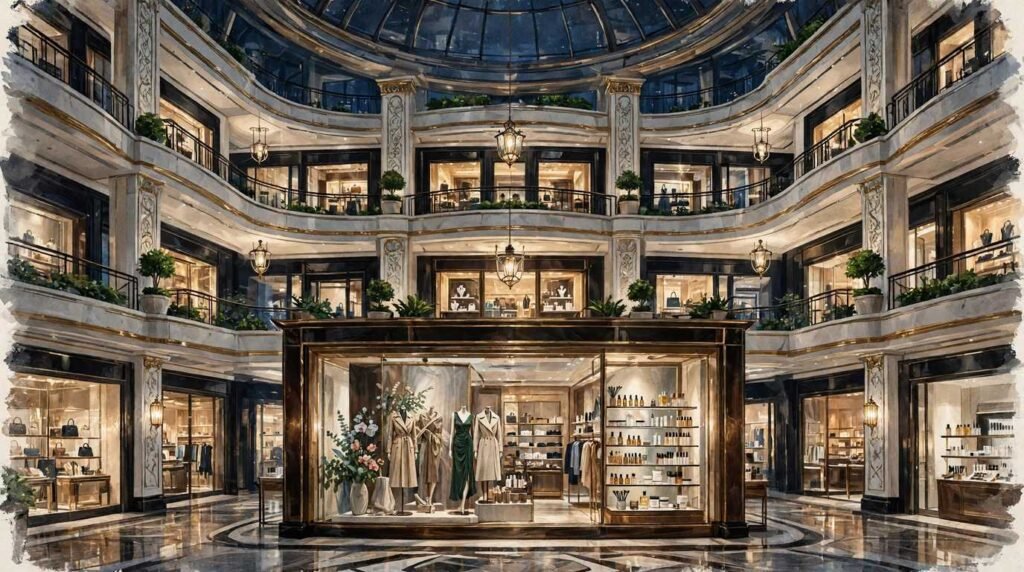
Most people recognize Victoria’s Secret and Bath & Body Works the moment they see the packaging. Fewer realize that both brands were built into giants by the same man — a soft-spoken retailer from Ohio who started with one small clothing store and ended up reshaping the way America shops. His name is Les Wexner, and his story stretches across six decades of mall culture, billion-dollar acquisitions, record philanthropy, and a high-profile controversy that nearly swallowed his legacy whole.
This guide walks through the whole picture. You will learn how Wexner went from a $5,000 loan to a retail empire worth tens of billions, which companies he actually owned, what he is worth in 2026, what he gave back to Ohio State University, and what is factually known about his relationship with Jeffrey Epstein — without hype and without guesswork.
The short answer: Les Wexner is the billionaire founder of L Brands, the retail group behind Victoria’s Secret and Bath & Body Works. Starting with a single clothing store in Columbus, Ohio, in 1963, he spent nearly six decades building one of the largest specialty retail empires in American history before stepping down in 2020. His estimated 2026 net worth is around $9 billion, and he remains one of the best-known philanthropists in Ohio.
Who Is Les Wexner?
Leslie Herbert Wexner — known to everyone as Les Wexner — was born on September 8, 1937, in Dayton, Ohio. He grew up in a family where retail was dinner-table conversation: his parents ran a small clothing shop, and he absorbed the business from the ground up. By the time he was a young man, he understood something that would define his career — that selling clothes was never just about fabric, but about identity, aspiration, and how a store made a customer feel.
Early Life and Education
Wexner attended Ohio State University, the school that would become central to his philanthropic life decades later. After college, he worked in his family’s store, where he saw firsthand how a small retailer operated — and also where its limits were. He wanted to test his own ideas about merchandising and store design, but he could not do that inside someone else’s shop. So he did what almost nobody in his position would have dared: he struck out on his own.
Why His Background Mattered
Wexner’s upbringing gave him two things most competitors lacked. First, he had practical retail instincts — pricing, inventory, customer psychology — learned in a real store, not a classroom. Second, he had the immigrant-family drive common to so many great American retailers: the sense that nobody was going to hand him anything, so he had better build it himself. That combination of street-level retail knowledge and relentless ambition became the engine of everything that followed.
How Did Les Wexner Start The Limited?
In 1963, at just 26 years old, Wexner opened a women’s apparel store in Columbus, Ohio, called The Limited. The name was deliberate: instead of trying to stock everything for everyone, the store carried a limited, tightly curated selection of moderately priced clothing for young women. It was the opposite of the sprawling department store — small, focused, and fast.
The money came from a $5,000 loan from his aunt, matched with a bank loan. That modest start would be hard to recognize in what it became.
From One Store to a Chain
The concept worked immediately. Young women liked the focused assortment; Wexner liked the economics of turning inventory quickly instead of marking down stale stock. He opened more stores, refined the formula, and kept expanding. In 1969, The Limited went public, giving Wexner the capital to think much bigger.
Going public changed everything. Where other retailers expanded slowly, Wexner used the public markets to fund an acquisition spree that would define the next two decades of American mall retail.
How Did Les Wexner Turn Victoria’s Secret Into a Global Brand?
Here is one of the most famous deals in retail history — and a fact that surprises people. Les Wexner did not found Victoria’s Secret. The lingerie chain was started by Roy Raymond as a small San Francisco shop that was struggling. In 1982, Wexner bought it for roughly $1 million: a handful of stores plus a mail-order catalog business.
What happened next is a case study in branding. Wexner reimagined Victoria’s Secret completely — the store design, the packaging, the catalog, the marketing. He turned a sleepy lingerie shop into a glamorous, aspirational brand, complete with the fashion shows that would eventually become a cultural phenomenon. By 1992, Victoria’s Secret was estimated to be worth roughly $1 billion. At its peak in the 2000s and 2010s, the brand generated billions in annual sales and dominated the intimate apparel category.
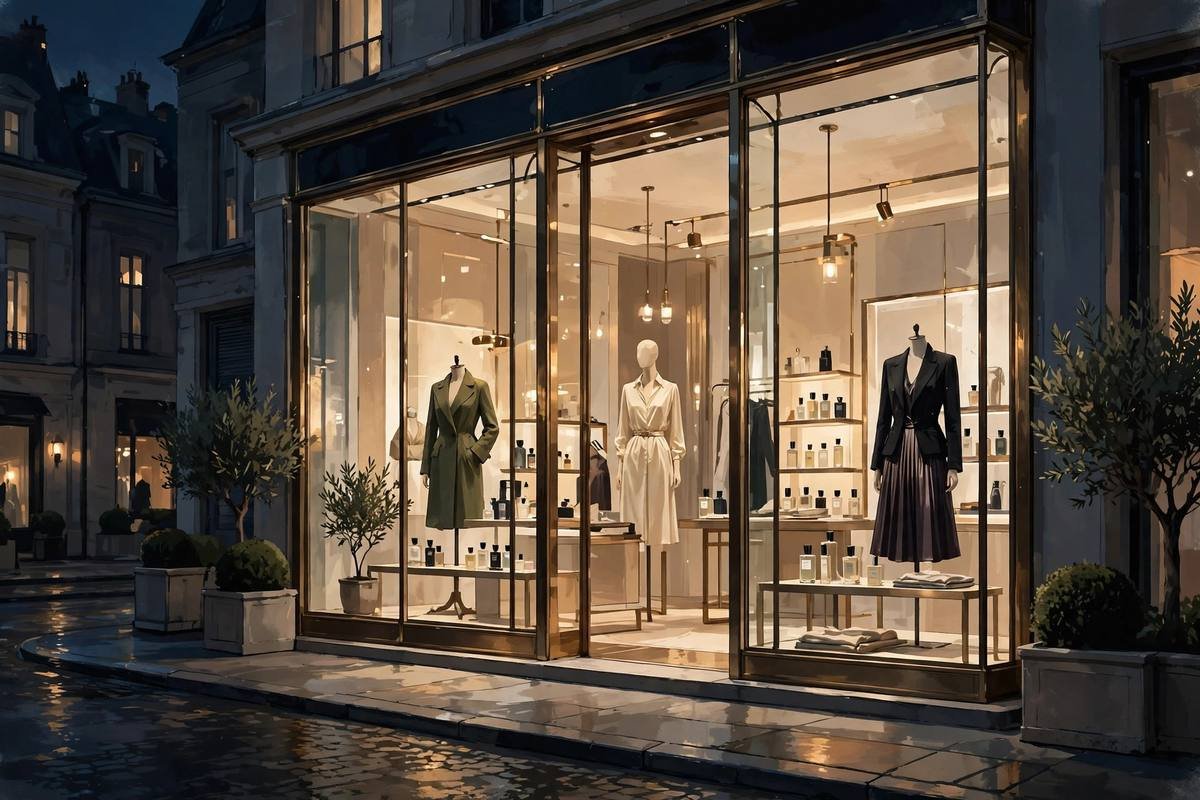
The Victoria’s Secret deal reveals Wexner’s signature move: he rarely invented brands from scratch. He bought underdeveloped ones, applied world-class branding and operational discipline, and scaled them nationally. It was retail as alchemy — finding gold where others saw an ordinary shop.
What Companies Did Les Wexner Build and Buy?
Over the decades, Wexner’s company — first called The Limited, later Limited Brands, and from 2013 known as L Brands — assembled an extraordinary portfolio. At its peak, the group operated more than 4,000 stores and generated peak annual revenues of roughly $12.9 billion in 2018. Here are the major pieces of the empire, verified from the public record:
| Brand | How It Joined | What Happened Next |
|---|---|---|
| The Limited | Founded by Wexner in 1963 | Sold to Sun Capital in 2007–2010; stores closed in 2017 |
| Mast Industries | Acquired in 1978 | Became the group’s sourcing backbone |
| Victoria’s Secret | Bought from Roy Raymond in 1982 for ~$1 million | Spun off as an independent company in 2021 |
| Lane Bryant | Acquired in 1982 for $105 million | Sold to Charming Shoppes in 2001 |
| Henri Bendel | Acquired in 1985 for $10 million | Closed permanently in January 2019 |
| Lerner | Acquired in 1985 for $297 million | Became New York & Company |
| Abercrombie & Fitch | Acquired in 1988 for $46 million | Spun off as an independent public company in 1996 |
| Bath & Body Works | Launched by the group in 1990 | Became the surviving core of the company |
| Express | Developed as Limited Express in the 1980s | Majority stake sold to Golden Gate Capital in 2007 |
| La Senza | Acquired in 2007 | Sold to Regent in January 2019 |
| PINK | Launched as a Victoria’s Secret brand in the 2000s | Spun off with Victoria’s Secret in 2021 |
The Strategy Behind the Empire
Wexner’s method was remarkably consistent. He bought brands cheap, professionalized their operations, and — most importantly — understood the customer better than anyone else in the building. Colleagues described him as intensely demanding: one executive said he had “incredibly high standards and insists on excellence,” perceiving “no limits to what people can do.”
His operational innovation was just as important as his branding. He ran The Limited’s supply chain like a fast-fashion machine decades before that term existed, turning over inventory faster than department store competitors. In 2015, Fortune described him as the longest-serving CEO of any Fortune 500 company — a record that reflected 57 years at the top.

What Is Les Wexner’s Net Worth in 2026?
Les Wexner’s fortune has moved in waves, tracking the rise and fall of mall retail — and then its aftermath. As of 2026, estimates place his net worth at roughly $9 billion, with published figures ranging from about $8.8 billion on Forbes’ 2026 billionaires list to roughly $9.3 billion in more recent estimates. That makes him one of the richest people in Ohio, where he has long ranked at or near the top.
Here is how his wealth has moved over the years:
| Year | Estimated Net Worth | What Was Happening |
|---|---|---|
| 1986 | $1.4 billion | Empire expanding rapidly; already among the richest Americans |
| 2007 | ~$4.5 billion | L Brands dominant in mall retail |
| 2015 | ~$7.9 billion | Peak wealth era; Victoria’s Secret valuation at an all-time high |
| 2020 | ~$4.7 billion | Victoria’s Secret struggling; stock declining amid controversy |
| 2022 | ~$6.2 billion | After the Victoria’s Secret spinoff; Bath & Body Works standalone |
| 2026 | ~$9 billion | Diversified investments; early stakes including AI company CoreWeave reported to have boosted the total |
A few things shaped this trajectory. Wexner did not cash out early — he stayed at the top for 57 years, so his fortune compounded through decades of founder ownership rather than a single exit. When Victoria’s Secret weakened, he separated it from the healthier Bath & Body Works, protecting the core of his wealth. And in recent years, early investments — including a reported early stake in the AI infrastructure company CoreWeave — have added substantially to his fortune.
Why Is Ohio State So Important to Les Wexner?
Few billionaires are as closely tied to one institution as Les Wexner is to Ohio State University. He served on the university’s Board of Trustees from 1988 to 1997, returned for a second term in 2005, and was elected chair in 2009. In 2004 he received the Woodrow Wilson Award for Corporate Citizenship.
Then came the gifts. In February 2011, Wexner pledged $100 million to Ohio State — $65 million personally and $35 million from the Limited Brands Foundation — directed mainly to the university’s academic Medical Center and the James Cancer Hospital and Solove Research Institute, with additional support for the Wexner Center for the Arts. It was the largest gift in the university’s history. A year later, in February 2012, the university renamed its medical center the Ohio State University Wexner Medical Center, commemorating what the university president called his “indelible, lifelong legacy of leadership at Ohio State.”

The Wexner Foundation
Wexner’s philanthropy extends well beyond Ohio. In 1983, he established the Wexner Foundation, which became one of the most prominent Jewish philanthropic organizations in the world. In 1985, he partnered with Rabbi Herbert A. Friedman to launch the Wexner Heritage Program, designed to educate Jewish communal leaders. The foundation went on to create fellowship programs for emerging Jewish professional leaders and for mid-career Israeli public officials studying at Harvard’s Kennedy School. Through the L Brands Foundation, Wexner also contributed $163.4 million to the Columbus Foundation. All told, his charitable giving has exceeded $500 million.
What Happened Between Les Wexner and Jeffrey Epstein?
No biography of Les Wexner is complete without addressing this — and it deserves a factual, unsensational account, because it is the shadow over his legacy. The documented facts are these:
- Wexner met Jeffrey Epstein in the mid-1980s. They were introduced around 1986 through a mutual acquaintance in the insurance business, Robert Meister.
- By 1987–1988, Epstein began handling financial tasks for Wexner, and in the 1990s he was given power of attorney over Wexner’s affairs. Epstein served as Wexner’s financial manager for roughly two decades, from 1987 to 2007.
- Wexner has said that he severed the relationship in 2007 after discovering that funds were missing. He has stated that he deeply regrets the association.
- In February 2026, Wexner gave a closed-door deposition to the U.S. House Oversight Committee. In his opening statement, he described Epstein as a “conman” and called himself “naive, foolish and gullible.”
- In March 2026, lawsuits were filed in New York Supreme Court by Epstein victims against Wexner, the Wexner Foundation, and related entities, alleging that financial transfers helped sustain Epstein’s network. Wexner’s representatives called the claims baseless and said there was no factual support for them. He has not been charged with any crime.
Earlier shareholder derivative lawsuits filed after Epstein’s 2019 arrest were settled in 2021–2022 for $90 million, with the agreement requiring L Brands to invest in harassment-prevention programs and strengthen board oversight.
Why This Matters for the Story
The Epstein association changed Wexner’s public standing permanently. It put pressure on his leadership at L Brands, accelerated his exit, and led to formal reviews — including calls to remove his name from institutions that bear it. Whatever the final legal picture becomes, the episode is now inseparable from any honest account of who Les Wexner is.
Why Did Les Wexner Step Down From L Brands?
In February 2020, after nearly six decades at the helm, Wexner announced he would step down as chairman and CEO of L Brands. The announcement came alongside a deal to sell a 55% stake in Victoria’s Secret to private equity firm Sycamore Partners at a $1.1 billion valuation — a deal that later fell through. Investor pressure was mounting on two fronts: the business (Victoria’s Secret’s sales were declining as its marketing fell out of step with consumers) and the reputational (scrutiny of the Epstein relationship was intensifying).
Wexner transitioned to the role of chairman emeritus. The company then restructured completely: in August 2021, L Brands spun off Victoria’s Secret as a separate public company (Victoria’s Secret & Co., including PINK) and renamed the remaining business Bath & Body Works, Inc. The flagship The Limited brand, meanwhile, had been sold off years earlier, with its remaining stores closing in 2017.
He remains chair emeritus of Bath & Body Works, Inc. — a connection to the company he spent 57 years building.
What Is Les Wexner’s Family and Personal Life Like?
Wexner remained a bachelor until his mid-fifties. On January 23, 1993, at age 55, he married Abigail S. Koppel, a 31-year-old attorney. The couple has four children: Sarah, David, Harry, and Hannah. Abigail Wexner became a significant philanthropist in her own right, leading the family’s charitable activities and founding organizations focused on child welfare and family safety.
The family lives in New Albany, Ohio — a community northeast of Columbus that Wexner himself helped develop through his New Albany Company. Their Georgian-inspired estate sits on roughly 336 acres and includes a 45,000-square-foot main house built in 1990. For twenty years, the estate hosted an annual equestrian event benefiting charity before it ended in 2018. Wexner also owns Foxcote House, an 18th-century estate in Warwickshire, England, and the family owns Limitless, a 315-foot superyacht built by Lürssen and launched in 1997. He is a well-known art collector, with a collection reportedly worth hundreds of millions.
FAQs About Les Wexner
Who is Les Wexner?
Les Wexner is an American billionaire businessman who founded The Limited in 1963 and built it into L Brands, the retail group behind Victoria’s Secret and Bath & Body Works. He was born on September 8, 1937, in Dayton, Ohio, and served as CEO for 57 years before stepping down in 2020.
What is Les Wexner’s net worth in 2026?
His estimated net worth in 2026 is around $9 billion, with published estimates ranging from roughly $8.8 billion to $9.3 billion depending on the source. He is among the richest people in Ohio.
Did Les Wexner really buy Victoria’s Secret for $1 million?
Yes. In 1982, Wexner bought Victoria’s Secret — then a struggling San Francisco lingerie shop with a handful of stores and a catalog business — from founder Roy Raymond for approximately $1 million. He rebuilt it into the world’s leading intimate apparel brand, estimated to be worth around $1 billion by 1992.
How old is Les Wexner?
Les Wexner was born on September 8, 1937, which makes him 89 years old as of 2026.
What happened to L Brands?
In August 2021, L Brands split into two independent public companies: Victoria’s Secret & Co. (including Victoria’s Secret and PINK) and Bath & Body Works, Inc. Wexner is now chair emeritus of Bath & Body Works, Inc.
Is Les Wexner still involved with Bath & Body Works?
He holds the title of chair emeritus of Bath & Body Works, Inc., maintaining a connection to the company he founded. He stepped down from day-to-day leadership and the CEO role in 2020.
Where does Les Wexner live?
He lives in New Albany, Ohio, northeast of Columbus, on a large Georgian-style estate of about 336 acres. He played a major role in developing the New Albany community itself.
Final Thoughts
Les Wexner’s story is really two stories braided together. One is a classic American business tale: a young man with a $5,000 loan and a sharp eye for what shoppers wanted, who built a single Columbus store into an empire that defined mall retail for a generation. The other is a cautionary one — about how a lifetime of achievement can be shadowed by one disastrous relationship, and how quickly reputation can erode even after six decades of building.
What endures is instructive either way. Wexner proved that understanding the customer beats almost everything else in retail, that branding can transform an ordinary product into a cultural force, and that operational discipline compounds over time. Whether future generations remember him primarily as the man behind Victoria’s Secret or as a cautionary figure will depend on how the final chapters of his story play out — but his imprint on American retail is already permanent.
If you enjoy well-researched profiles and explainers, dailyorvix.com publishes deep dives across business, tech and culture.
Read Also: How Old Is the Universe? The 13.8-Billion-Year Answer Explained Simply (2026 Guide)

1 Comment