

Some actors are remembered for a single role. David Carradine is remembered for a whole way of moving through the world. When most people picture him, they picture a quiet man walking down a dusty road, carrying almost nothing, stopping to help a stranger, and then walking on. That image comes from Kung Fu, the television series that made him famous in the 1970s, but it only tells part of the story.
Carradine worked as an actor for more than five decades. He played folk heroes and outlaws, gentle wanderers and dangerous men. He worked in big studio films, low-budget pictures, television movies, and on stage. Some of his films are now considered classics. Others are curiosities that only his most loyal fans have tracked down. Put together, they form one of the longest and most unusual careers in American screen acting.
This guide looks at that career in full: where Carradine came from, how Kung Fu changed his life, which films matter most, and what his legacy looks like today. Whether you first met him as Caine, as Bill in Kill Bill, or as a name you keep seeing in film credits, you will find the full picture here.
The short answer: David Carradine (1936–2009) was an American actor best known for playing Kwai Chang Caine, the wandering Shaolin priest in the TV series Kung Fu, and Bill in Quentin Tarantino’s Kill Bill films. The son of actor John Carradine, he built a career spanning more than five decades across television, film, and stage, and he remains a lasting figure in American popular culture.
Who Was David Carradine?
David Carradine was born in 1936 in Hollywood, California, into a family already deep in the acting world. His father was John Carradine, a prolific character actor whose career stretched from the studio era into the 1980s. Growing up around film sets and stage work gave David an early education in the business, but it did not hand him an easy path. He had to find his own voice as a performer, and it took him time to do it.
As a young man, Carradine studied and worked in theatre before moving into television and film. Early roles in the 1960s gave him steady work and taught him the craft of screen acting: how to hold a close-up, how to make a quiet moment land, how to be believable without pushing. Those lessons would matter enormously later, because his most famous character barely raised his voice at all.
Carradine was also a restless creative person. Beyond acting, he was interested in music, writing, and martial arts, and he pursued those interests throughout his life. That restlessness showed in his career choices. He rarely stayed in one lane for long, and he often chose projects that other actors might have passed over. Sometimes that led to remarkable work. Sometimes it led to forgettable films. Either way, it kept his career moving for decades when many of his contemporaries had faded from view.
A Family of Actors
The Carradine name runs through several generations of American acting:
- John Carradine, David’s father, was a well-known character actor in classic Hollywood films.
- Keith Carradine, David’s younger half-brother, became an actor and singer in his own right.
- Robert Carradine, another half-brother, also built a long acting career.
- Martha Plimpton and other members of the wider family continued the tradition into later generations.
Coming from that background meant David Carradine was never an outsider to the business. But it also meant he was constantly measured against a famous father. His answer to that pressure was to build a career that looked nothing like anyone else’s.
How Did Kung Fu Make David Carradine Famous?
Kung Fu, which ran on American television in the early 1970s, was the role that changed everything for Carradine. He played Kwai Chang Caine, a Shaolin priest raised in China who wanders the American West in the late 1800s. Caine is a man of peace who keeps getting drawn into other people’s conflicts, and who resolves them with a mixture of wisdom, patience, and, when there is no other choice, martial arts skill.
The show was unusual for its time. It mixed the western with Eastern philosophy, and it slowed the usual TV pace down to make room for flashbacks, moral questions, and quiet conversations. Carradine’s performance was central to that mix. He played Caine as calm, thoughtful, and physically graceful, and audiences responded. The series became a hit and turned Carradine into a household name.
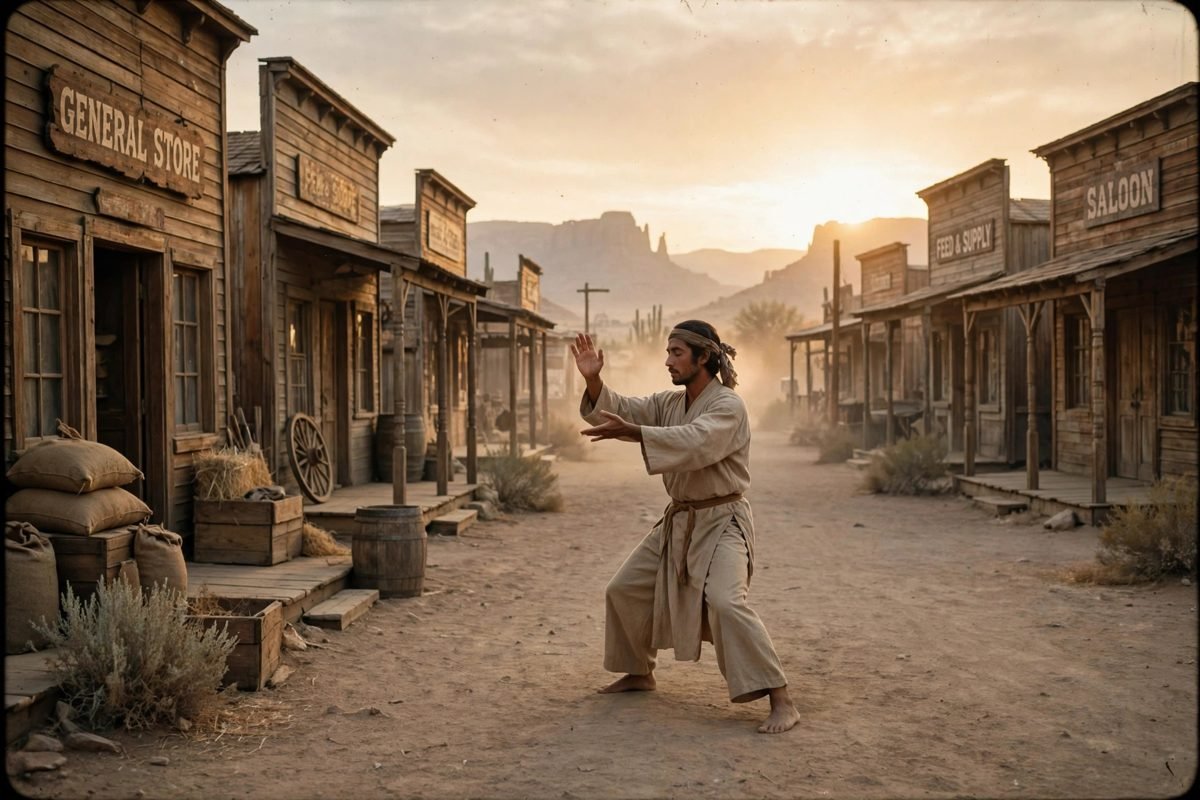
Kung Fu also gave Carradine a public identity that would follow him for the rest of his life. For many viewers, he simply was Caine. That kind of identification can be a gift and a burden: it guarantees you are remembered, but it can also make it hard for audiences to see you as anyone else. Carradine spent much of the rest of his career both embracing and pushing against that image, returning to Caine-like roles while also seeking out very different characters.
Why Did Kung Fu Connect With Audiences?
Several things made the show stand out:
- A hero who did not want to fight. Caine preferred to walk away from trouble. When he fought, it felt like a last resort, not a thrill.
- A mix of genres. Western landscapes met martial arts and philosophy, a combination American TV had not really tried before.
- Flashbacks to Caine’s training. The scenes of his youth in the temple gave the show a reflective, almost fable-like quality.
- A wandering structure. Each episode brought new people and new problems, so the show felt fresh even as its hero stayed the same.
That formula proved durable. Decades later, Kung Fu is still discussed, revived, and referenced, and Carradine’s Caine remains the version most people picture first.
What Was David Carradine’s Early Career Like?
Before Kung Fu, Carradine spent the 1960s building his resume piece by piece. He appeared in television dramas and westerns, took supporting film roles, and worked on stage. This was the hard, unglamorous part of an acting career: learning on the job, taking what was offered, and slowly becoming someone directors trusted.
The turning point came when he began landing roles that used his particular strengths — a lean, thoughtful presence, a voice that could sound gentle or menacing, and a physical ease that made action scenes look natural. Casting directors noticed. By the time Kung Fu came along, he was ready for a leading role, even if nobody could have predicted how large that role would become.
It is worth remembering that Carradine’s early career was not a straight line to stardom. Like most working actors, he had quiet years and uncertain stretches. What set him apart was persistence. He kept working, kept learning, and stayed open to unusual projects. That habit would define the rest of his career.
Which Films Defined David Carradine’s Career?
Carradine’s filmography is large and varied, which is part of why it is fun to explore. A few titles, though, come up again and again when people talk about his best work. Here are the ones that matter most.
Bound for Glory (1976)
In Bound for Glory, Carradine played folk singer Woody Guthrie in a biographical drama about Guthrie’s early life during the Great Depression. The film was praised for its look and atmosphere, and Carradine’s performance was central to its success. Playing a real, beloved figure is always a risk, but Carradine brought a quiet intensity to Guthrie that suited the material. For many critics, this was proof that he could carry a serious dramatic film, not just a television series.
Death Race 2000 (1975)
Death Race 2000 is the opposite kind of film: a wild, darkly comic science-fiction picture in which Carradine played Frankenstein, the champion of a violent cross-country race. The film became a cult favorite, and Carradine’s cool, deadpan performance is a big reason why. It showed his range. The same actor who played the peaceful Caine could also play a sardonic, leather-clad anti-hero and make it work.
The Long Riders (1980)
In The Long Riders, Carradine played Cole Younger, a member of the James-Younger gang, in a western about the famous outlaw brothers. The film is notable for casting real-life acting brothers as the outlaw brothers, and Carradine’s steady, world-weary Cole fits the film’s tone well. It remains a favorite among western fans and a good example of Carradine’s comfort in the genre.
Kill Bill: Vol. 1 and Vol. 2 (2003–2004)
Late in his career, Carradine took on the role that introduced him to a whole new generation: Bill, the title character of Quentin Tarantino’s Kill Bill films. Bill appears only sparingly in the first volume but dominates the second, and Carradine played him as a calm, articulate, and quietly dangerous man — a mentor, a lover, and a villain all at once.
The role worked so well partly because it drew on everything Carradine had done before. Bill’s long speeches about philosophy and storytelling echo the reflective side of Caine, while his menace recalls the harder characters Carradine played in exploitation and genre films. Tarantino clearly cast him with that history in mind, and the result was one of the most memorable performances of Carradine’s later career. For younger viewers, Bill became the gateway into the rest of his work.
| Film / Series | Role | Why It Matters |
|---|---|---|
| Kung Fu (TV, 1970s) | Kwai Chang Caine | Made him a star; defined his public image |
| Death Race 2000 (1975) | Frankenstein | Cult classic; showed his comic, sardonic side |
| Bound for Glory (1976) | Woody Guthrie | Serious dramatic lead; critical respect |
| The Long Riders (1980) | Cole Younger | Strong western ensemble performance |
| Kill Bill Vol. 1 & 2 (2003–2004) | Bill | Late-career comeback; introduced him to a new generation |
What Happened With Kung Fu: The Legend Continues?
In the 1990s, Carradine returned to the character that made him famous — or rather, to his descendant. In Kung Fu: The Legend Continues, he played Kwai Chang Caine, the grandson of the original Caine, a Shaolin priest living in the modern world. The series ran for several seasons and gave Carradine a steady leading role again, this time as an older, wiser figure guiding a younger generation.
The show was different from the original: it was set in the present day, it leaned more on police and action plots, and it paired Caine with his detective son. But it kept the heart of the idea — a man of principle trying to live peacefully in a violent world. For fans, it was a welcome return. For Carradine, it was proof that the character still had life in it decades later.
This second run also showed something about Carradine’s relationship with his audience. He did not run from Caine. He revisited the character on new terms, as an older man, and found fresh things to do with him. That willingness to return without simply repeating himself is part of why the role stayed alive.
What Kind of Actor Was David Carradine?
Describing Carradine’s acting style is tricky because he worked in so many modes, but a few qualities run through most of his best performances:
- Stillness. He was comfortable doing very little on camera. A look, a pause, or a slow walk often did more work than a speech.
- A distinctive voice. His low, measured delivery could sound warm, weary, or threatening depending on the role.
- Physical presence. Years of martial arts interest gave his movement a grace that directors used well, especially in action scenes.
- Openness to genre. He moved easily between westerns, science fiction, drama, horror, and comedy, and he rarely seemed embarrassed by low-budget material.
That last point matters. Some actors protect their reputation by choosing only prestige projects. Carradine did the opposite. He worked constantly, in films of every size and quality, and he treated each job seriously. That work ethic kept him visible for decades, and it also meant his filmography is uneven — brilliant performances sit alongside forgettable ones. Fans tend to see that as part of his charm rather than a flaw.
How Long Did David Carradine’s Career Last?
Carradine’s professional career stretched across more than five decades, from the early 1960s into the late 2000s. That length alone puts him in rare company. Few actors stay continuously employed for that long, and fewer still manage to have major successes in three different decades — the 1970s with Kung Fu, the 1980s and 1990s with steady film and television work, and the 2000s with Kill Bill.
Longevity like that does not happen by accident. It comes from adaptability: being willing to move between leading roles and supporting parts, between film and television, between big releases and small ones. Carradine did all of that. He also kept a loyal audience. People who grew up watching Kung Fu followed him into later projects, and Kill Bill brought in viewers who had never seen the earlier work. That overlapping audience is one reason his name still comes up today.
For readers who enjoy tracing long careers like this one, sites like adailyinsight360.com cover a wide range of film, culture, and biography stories in a similar everyday style, and they make a good next stop after finishing a profile like this.
What Was David Carradine’s Life Away From the Screen?
Away from acting, Carradine lived a life that was, by many accounts, as wandering as his characters. He was married several times and had children, and his personal life was sometimes turbulent. He was open about his interests in music and martial arts, and he wrote and recorded material over the years. Friends and colleagues often described him as curious, funny, and unconventional — someone who followed his own path even when it was not the easiest one.
It is fair to say his personal life had difficult chapters, as many long lives do. This guide focuses on his public career, which is what most readers come here to understand, but it is worth noting that Carradine himself never pretended to be a simple or untroubled figure. The complexity that made his performances interesting was part of who he was.
How Did David Carradine Die?
David Carradine died in Bangkok, Thailand, in June 2009, while he was there working on a film. He was 72. His death was widely reported at the time and came as a shock to fans and colleagues, not least because he was still actively working.
The circumstances of his death were the subject of much public discussion and speculation. Out of respect for his family and for the facts, this guide keeps it simple: he died suddenly while abroad on a working trip, and he is remembered for his work, not for the details of that final day. Fans who want to honor him tend to do so by revisiting his films, and that seems like the right way to remember a working actor.
What Is David Carradine’s Legacy Today?
Carradine’s legacy rests on a few lasting pillars:
- Kung Fu endures. The original series is still watched, discussed, and remade in spirit. Caine remains one of television’s most recognizable wandering heroes.
- Kill Bill secured his place with new audiences. Bill is now one of the most quoted and analyzed villains of modern film, and it gave Carradine a powerful final act.
- His filmography rewards exploration. Beyond the famous titles, there are dozens of westerns, genre films, and television appearances that show different sides of his talent.
- He represents a kind of working actor that is rarer now. Carradine worked constantly, across formats and budgets, for over fifty years. That persistence is its own achievement.
His influence also shows up in subtler ways. The calm, reluctant hero he perfected in Kung Fu became a template that later shows and films have borrowed again and again. And the idea of a performer who keeps reinventing himself late in life — Carradine was in his late sixties when Kill Bill came out — remains an encouraging example for actors and audiences alike.
For a different kind of everyday reading after this profile, homewaterinsights.com offers practical guides and lifestyle stories that pair well with a long afternoon of film history.

Where Should You Start Watching David Carradine?
If you are new to Carradine’s work, the size of his filmography can feel overwhelming. Here is a simple path through it:
| If You Like… | Start With | What You Will Get |
|---|---|---|
| Classic television | Kung Fu | The role that defined him, at its best |
| Serious drama | Bound for Glory | A folk-hero biopic with a restrained lead performance |
| Cult films | Death Race 2000 | Wild, funny, and very 1970s |
| Westerns | The Long Riders | A stylish outlaw story with a strong ensemble |
| Modern film | Kill Bill Vol. 1 & 2 | His late-career triumph as Bill |
After those, you can branch out into Kung Fu: The Legend Continues for his later television work, or explore his many genre films from the 1970s and 1980s. There is no single correct order. The joy of discovering Carradine is in finding which version of him speaks to you first — the wanderer, the outlaw, the folk singer, or the villain.
Frequently Asked Questions About David Carradine
Who was David Carradine?
David Carradine was an American actor (1936–2009) best known for playing Kwai Chang Caine in the television series Kung Fu and Bill in Quentin Tarantino’s Kill Bill films. He was the son of actor John Carradine and worked in film, television, and theatre for more than five decades.
What was David Carradine’s most famous role?
His most famous role was Kwai Chang Caine in Kung Fu, the wandering Shaolin priest who travels the American West helping strangers. The series made him a star in the 1970s and remains the role most people associate with him, although Bill in Kill Bill is a close second for younger audiences.
Was David Carradine related to John Carradine?
Yes. David Carradine was the son of John Carradine, the prolific character actor of classic Hollywood. Acting ran in the family: his half-brothers Keith Carradine and Robert Carradine also became actors.
What films was David Carradine in?
His best-known films include Bound for Glory (1976), in which he played Woody Guthrie; Death Race 2000 (1975), as Frankenstein; The Long Riders (1980), as Cole Younger; and Kill Bill Vol. 1 (2003) and Vol. 2 (2004), as Bill. He also appeared in dozens of other films and television productions over five decades.
Did David Carradine return to Kung Fu later in his career?
Yes. In the 1990s he starred in Kung Fu: The Legend Continues, playing a modern-day descendant of the original Caine. The series ran for several seasons and gave him a second long-running television success with the character’s legacy.
How did David Carradine die?
David Carradine died in Bangkok, Thailand, in June 2009, at the age of 72, while he was there working on a film. His death was sudden and widely reported. This guide keeps the focus on his career and legacy, which is how most fans prefer to remember him.
Why is David Carradine still remembered today?
He is remembered because his career combined longevity, range, and two truly iconic roles. Kung Fu made him a television legend, Kill Bill introduced him to a new generation, and his decades of steady work across genres left a filmography that still rewards discovery.
Conclusion
David Carradine’s career is a reminder that an actor’s legacy is not always built on a single perfect film. Sometimes it is built on persistence, on a willingness to keep working, and on a few roles that capture something people recognize in themselves. Caine, the peaceful wanderer, and Bill, the dangerous storyteller, are opposites in many ways — but both are unmistakably Carradine. Both are calm, articulate, and hard to forget.
If you have only seen one of his famous roles, the other is waiting, along with a long list of westerns, dramas, and cult films that show just how wide his range was. Start with Kung Fu or Kill Bill, follow the path that interests you, and you will understand why, decades after his first big success, David Carradine is still being watched, quoted, and discovered by new audiences.
Read Also: Sam Shepard: His Life, Plays, and Legacy (2026 Guide)

1 Comment