
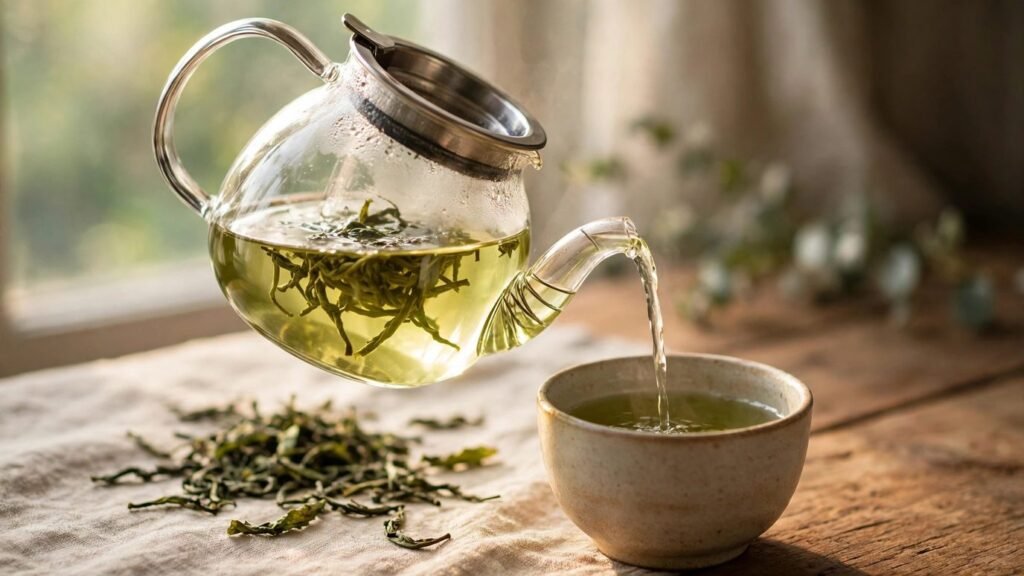
How to brew green tea?
There is a particular kind of disappointment that only green tea can deliver. You buy a nice tin, pour in boiling water, and three minutes later you are staring at a cup that tastes like steeped lawn clippings. You assume you just do not like green tea. Most of the time, that is not true — you simply brewed it the way you would brew black tea, and green tea does not forgive that.
Green tea is gentler than black tea. Its leaves are not fully oxidized, which is why they stay green and taste fresh, grassy, and a little sweet when treated well. That same delicacy turns bitter when the water is too hot or the steep runs too long. Get those two variables right, and everything else falls into place. This guide covers the temperature, leaf amount, timing, teaware, and mistakes that decide whether your cup is smooth or harsh.
The short answer: Heat fresh water to about 70–80°C (160–180°F) — never boiling — use roughly 1 teaspoon (about 2 grams) of loose leaf tea per cup (240 ml / 8 oz), and steep for 1–3 minutes. Taste as you go, strain the leaves out promptly, and you will get a smooth, lightly sweet cup instead of a bitter one.
Why Does Green Tea Turn Bitter So Easily?
Bitterness in green tea is not a sign that you bought bad tea. It is mostly about heat and time. Hot water pulls compounds out of the leaves faster: some taste sweet and fresh, while others — mainly tannins and bitter catechins — taste harsh when too much of them end up in your cup. Boiling water extracts the bitter ones aggressively, which is why a cup made with water straight off a rolling boil can taste astringent even if the tea itself is excellent.
Time works the same way. A short steep gives you the delicate, aromatic compounds first; a long steep keeps extracting, and the balance tips toward bitterness. That is why two people can use the exact same tea and get completely different results.
Freshness matters too. Stale tea that has sat open in a warm kitchen for months will taste flat no matter what you do. If your tea smells faintly grassy and sweet when you open the tin, you are halfway there. If it smells like nothing at all, no brewing trick will bring it back.
What Water Temperature Is Best for Green Tea?
If you remember only one number from this guide, make it this one: 70–80°C, or 160–180°F. That range suits most green teas, from everyday sencha to finer, more delicate varieties — hot enough to draw out flavour and aroma, but cool enough to leave most harsh bitterness behind.
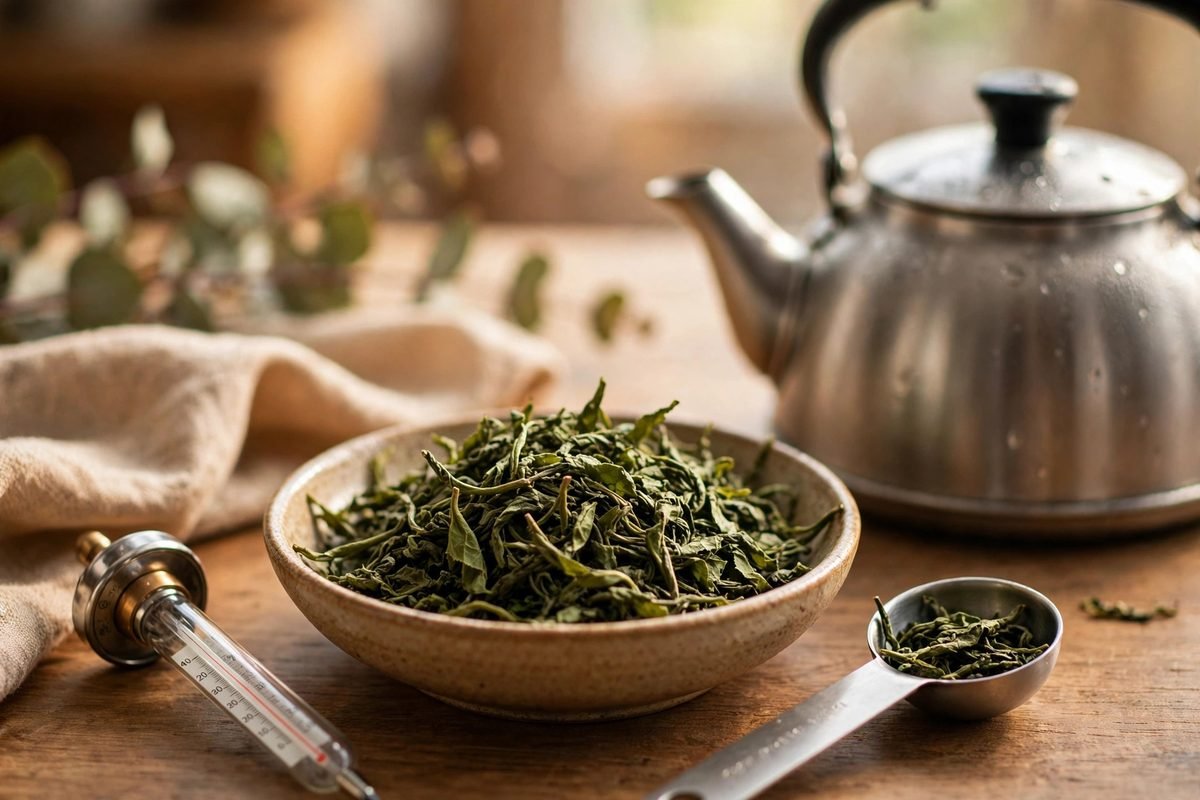
You do not need a variable-temperature kettle, though one makes life easier. With a regular kettle, boil the water and let it sit for about 3–5 minutes before pouring, or pour it into another vessel first — the transfer alone drops the temperature noticeably. A simple kitchen thermometer takes out the guesswork entirely.
Water quality matters too. Heavily chlorinated tap water can flatten the taste, and very hard water can make the cup feel dull. Filtered water is usually the safest choice: use water you would happily drink on its own, and your tea will taste cleaner for it.
Water Temperature by Tea Type
Different green teas have slightly different sweet spots, and the table below is a useful starting point. When in doubt, start at the cooler end of the range and work your way up.
| Tea type | Water temperature | Why it works |
|---|---|---|
| Sencha (Japanese) | 70–80°C / 160–175°F | Keeps the fresh, grassy flavour smooth |
| Chinese green tea (e.g. Dragon Well) | 75–85°C / 167–185°F | Slightly sturdier leaves handle a touch more heat |
| Jasmine green tea | 75–80°C / 167–180°F | Protects the delicate floral aroma |
| Genmaicha (green tea with roasted rice) | 80–85°C / 175–185°F | The toasted rice stands up to warmer water |
| Delicate first-harvest teas | 60–70°C / 140–160°F | Very tender leaves scorch easily |
These are starting points, not laws. If a tea tastes thin at 70°C, try 75°C next time; if it tastes sharp, go cooler. Small adjustments make a real difference.
How Much Tea Leaf Should You Use?
The standard starting point is about 1 teaspoon of loose leaf tea — roughly 2 grams — per 240 ml (8 oz) cup. That ratio gives a balanced cup: flavourful without being overpowering, light enough that you can taste the tea’s character rather than just its strength.
It is worth weighing your tea once or twice if you have a kitchen scale, because teaspoons are unreliable: a teaspoon of small, rolled leaves weighs more than a teaspoon of large, fluffy leaves. Once you know what 2 grams looks like for your tea, you can eyeball it from then on. If you prefer a stronger cup, add a little more leaf rather than steeping longer. More leaf gives you more flavour; more time mostly gives you more bitterness.
For tea bags, the ratio is already decided — one bag per cup. Bagged tea is cut much finer than loose leaf, so it releases flavour (and bitterness) faster, and often needs less time, not more.
How Long Should You Steep Green Tea?
For most green teas, 1–3 minutes is the sweet spot. Delicate Japanese teas often peak around 1–2 minutes; sturdier Chinese greens can handle 2–3 minutes. The first steep is usually the most aromatic, and the one people get wrong most often by leaving the leaves in too long.
A simple habit solves most steeping problems: set a timer and taste at the short end of the range. Sip at one minute; if it tastes good, stop, and if it tastes thin, give it another 30 seconds. You will learn your preference within two or three cups.
One point beginners often miss: steeping ends only when you separate the leaves from the water. Leaving an infuser sitting in the cup while you answer emails is the same as steeping for ten minutes. Strain promptly, then enjoy the cup.
What Teaware Do You Actually Need?
You do not need a shelf full of equipment. You need a way to hold the leaves, pour hot water over them, and get the leaves out again cleanly. Everything beyond that is convenience, not necessity.
A simple infuser basket that sits inside a mug works perfectly well, as long as it is roomy. Leaves need space to unfurl; a cramped tea ball squeezes them into a tight lump and the water cannot circulate properly. A small teapot with a built-in strainer is ideal if you brew for more than one person, and a traditional kyusu (a Japanese side-handled teapot) is lovely for Japanese greens — but neither is required.
Material matters less than people claim. Glass lets you watch the leaves unfurl, ceramic holds heat well, and porcelain is a classic for a reason. Avoid a mug that still smells of yesterday’s coffee, and rinse the vessel with hot water before brewing to keep the temperature steady.
How Do You Brew Loose Leaf Green Tea Step by Step?
Once you know the principles, the actual process is quick. Here is the method that works reliably, cup after cup:
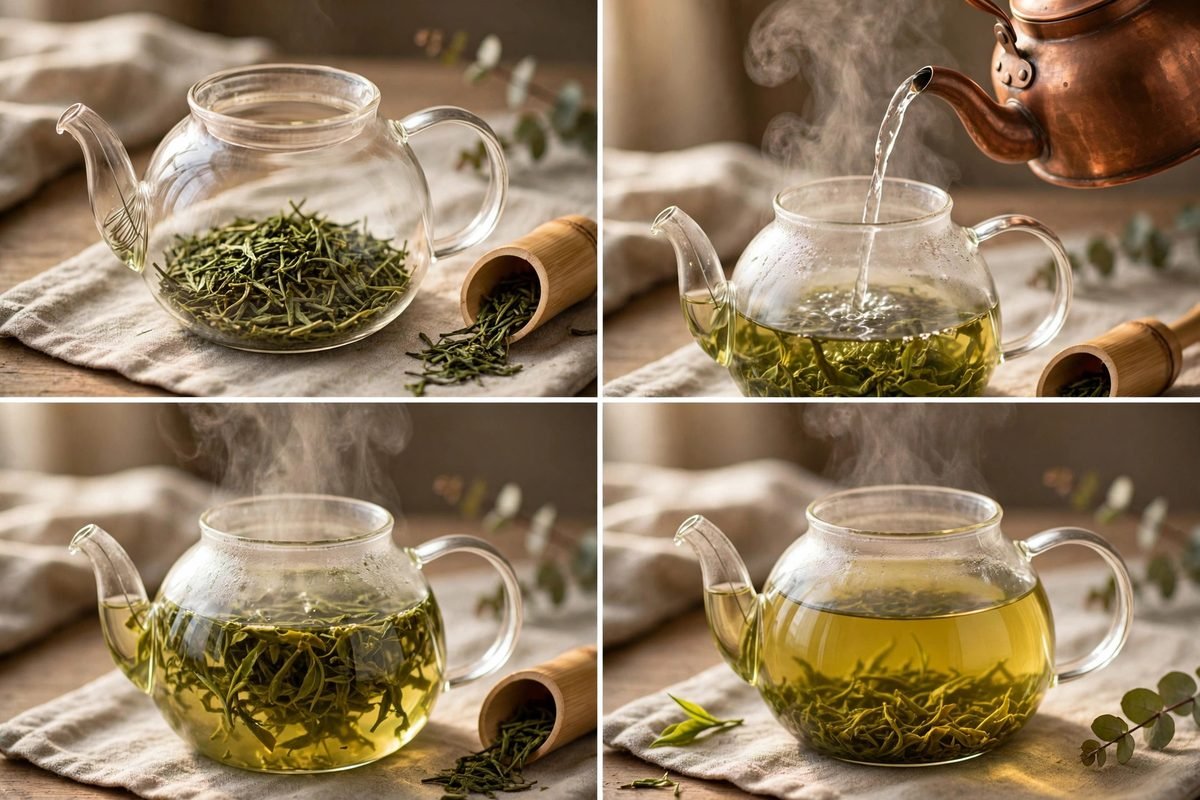
- Warm your vessel. Swirl a little hot water around your mug or teapot, then pour it out. This keeps the brewing temperature stable.
- Measure your leaf. Add about 1 teaspoon (2 grams) of loose leaf tea per 240 ml cup into a roomy infuser or teapot.
- Heat fresh water. Bring fresh, filtered water to a boil, then let it cool to about 70–80°C. Never reboil water that has already been boiled — it tastes flat.
- Pour gently. Pour the water over the leaves in a slow, steady stream, making sure all the leaves are wet.
- Steep briefly. Cover and steep for 1–3 minutes, tasting toward the short end of the range.
- Strain completely. Remove the infuser or strain the tea into another cup. Do not leave the leaves sitting in the water.
- Taste before adjusting. Drink it plain first. Only then decide whether you want it stronger, sweeter, or cooler next time.
That is the whole method — no special ritual, no equipment you cannot find in an ordinary kitchen. Pick one sensible method, adjust it to your taste over a few cups, and stick with it.
Can You Re-Steep Green Tea Leaves?
Yes, especially with good-quality loose leaf tea. Many green teas taste wonderful on a second and even a third steep, often becoming softer and sweeter. For the second steep, use water a few degrees hotter and steep for about the same time or a little longer. When the flavour turns thin and watery, the leaves are done.
How Do You Brew Green Tea Bags Without Ruining Them?
Tea bags get an unfairly bad reputation: a decent green tea bag, brewed properly, makes a perfectly pleasant cup. The problem is that most people treat bags like black tea bags — boiling water, five minutes, walk away. With green tea, that guarantees bitterness.
The fix is simple. Use cooler water, around 75–80°C, and steep for just 1–2 minutes. Bagged tea is cut finer, so it infuses faster. Dunk the bag gently rather than squeezing it against the mug, which forces out bitter compounds and sediment. If the cup tastes weak, use two bags next time or switch to loose leaf, rather than steeping one bag twice as long.
Loose Leaf vs Tea Bags
| Factor | Loose leaf | Tea bags |
|---|---|---|
| Flavour | Fuller, more nuanced, varies by steep | Simpler, more consistent, less complex |
| Steep time | 1–3 minutes | 1–2 minutes |
| Re-steeping | Usually 2–3 good steeps | Rarely worth a second steep |
| Cost per cup | Often cheaper for good quality | Convenient, but premium bags cost more |
| Convenience | Needs an infuser and a little more care | Quick, portable, no extra equipment |
Neither option is wrong. Loose leaf gives better flavour and re-steeping; bags win on convenience. Many tea drinkers keep both and reach for whichever fits the moment.
What Are the Most Common Green Tea Mistakes?
Most bad cups come down to a handful of habits, all easy to fix once you spot them:
- Using boiling water. This is the single biggest culprit. If your tea always tastes bitter, lower the temperature first before blaming the tea.
- Steeping too long. Forgetting the cup for five or ten minutes turns a delicate tea harsh. Set a timer until the habit sticks.
- Leaving the leaves in the cup. Steeping does not stop just because you stopped paying attention. Strain promptly.
- Using stale tea. Keep it sealed, cool, and dark (more on storage below).
- Reboiling old water. Water boiled, cooled, and boiled again tastes flat. Start fresh each time.
- Using too much leaf. A heaped tablespoon in a small mug will overpower the cup. Stick close to 1 teaspoon per cup, then adjust.
- Masking bitterness with sweetener. It is better to fix the brew than to cover it up.
Fix just the first two — cooler water and a shorter steep — and you will notice the difference immediately.
How Do You Make Iced Green Tea That Still Tastes Fresh?
Iced green tea is wonderful in warm weather, but the usual shortcut — brewing a hot cup and dumping ice into it — often produces a cloudy, diluted drink. Two better methods are both easy.
The first is hot-brew-and-chill: brew a double-strength batch (twice the usual leaf for the same water) at the normal temperature and steep time, strain it, let it cool to room temperature, then pour over plenty of ice. Brewing strong compensates for dilution, and cooling first keeps it clearer and smoother.
The second is cold brewing, which arguably gives the sweetest result. Add about 1 tablespoon of loose leaf per 500 ml of cold, filtered water, seal, and refrigerate for 6–12 hours. Strain and serve over ice. Cold water extracts flavour slowly and pulls out far less bitterness, so the result is naturally smooth. Set it up in the evening and wake up to a pitcher of iced tea.
For either method, add lemon, mint, or honey only after tasting the tea plain. A good iced green tea needs very little dressing up.
How Should You Store Green Tea to Keep It Fresh?
Green tea is more sensitive to storage than black tea, and poor storage is a quiet reason many cups taste flat. The enemies are air, light, heat, and moisture, in roughly that order. An airtight container in a cool, dark cupboard is ideal. If the tin your tea came in does not seal well, transfer the tea to a small airtight jar or opaque pouch.
Do not store tea in the refrigerator unless it is sealed extremely well — fridge air carries food smells, and tea absorbs odours eagerly. For tea you drink regularly, a cool cupboard is simpler and safer. Try to use an opened tin within a few months, and buy smaller amounts more often rather than stockpiling a bag that slowly loses its sparkle. With green tea, freshness is the whole point.
Frequently Asked Questions About Brewing Green Tea
Can I use boiling water for green tea?
You can, but you will almost certainly regret it. Boiling water extracts bitter compounds quickly and scorches delicate leaves. If you have no way to cool the water, at least let it sit for several minutes after boiling, or pour it between two vessels to bring the temperature down before it touches the leaves.
How many times can I reuse green tea leaves?
Good-quality loose leaf green tea usually gives two to three enjoyable steeps. Use slightly hotter water and a slightly longer steep for each round. When the flavour turns thin and watery, the leaves are done. Tea bags, with their finer cut leaf, generally give only one good cup.
Does green tea contain caffeine?
Yes, though generally less per cup than coffee. The exact amount varies with the tea, leaf amount, water temperature, and steep time. If you are sensitive to caffeine, a shorter steep and less leaf will give a milder cup.
Should I add milk, sugar, lemon, or honey?
That is a matter of taste, but try the tea plain first. A well-brewed green tea is naturally smooth and lightly sweet, and many people find they need nothing added. If you do sweeten it, a little honey dissolves easily in warm tea. Milk is less common with green tea, since it can mask the delicate flavour — but there is no rule against it if you enjoy it.
Why does my green tea taste grassy or fishy?
A light grassy note is normal in many green teas, especially Japanese ones. A strong fishy or seaweed-like taste often means the water was too hot or the steep too long — try cooler water and a shorter steep first. If it persists across teas, a Chinese green tea with a nuttier, mellower profile might suit you better.
Can I brew green tea with cold water?
Yes, and cold brewing is one of the best ways to make smooth, sweet green tea. Use about 1 tablespoon of loose leaf per 500 ml of cold water, refrigerate for 6–12 hours, then strain. It takes longer than hot brewing, but the result is naturally low in bitterness and perfect over ice.
Is it okay to drink green tea every day?
For most people, enjoying green tea daily as part of a varied diet is perfectly normal — it is one of the most widely consumed drinks in the world. As with any caffeinated drink, moderation makes sense, and if you have specific health questions or take medication, check with a healthcare professional rather than relying on general advice here.
Conclusion
Brewing green tea well is not about mastering a complicated ritual. It comes down to three habits: cooler water, the right amount of leaf, and a short, timed steep. Start with 70–80°C water, a teaspoon of leaf per cup, and a two-minute steep, then adjust in small steps until the cup tastes the way you like it.
Read Also: Why Is Pluto Not a Planet? The Full Story Explained

1 Comment