
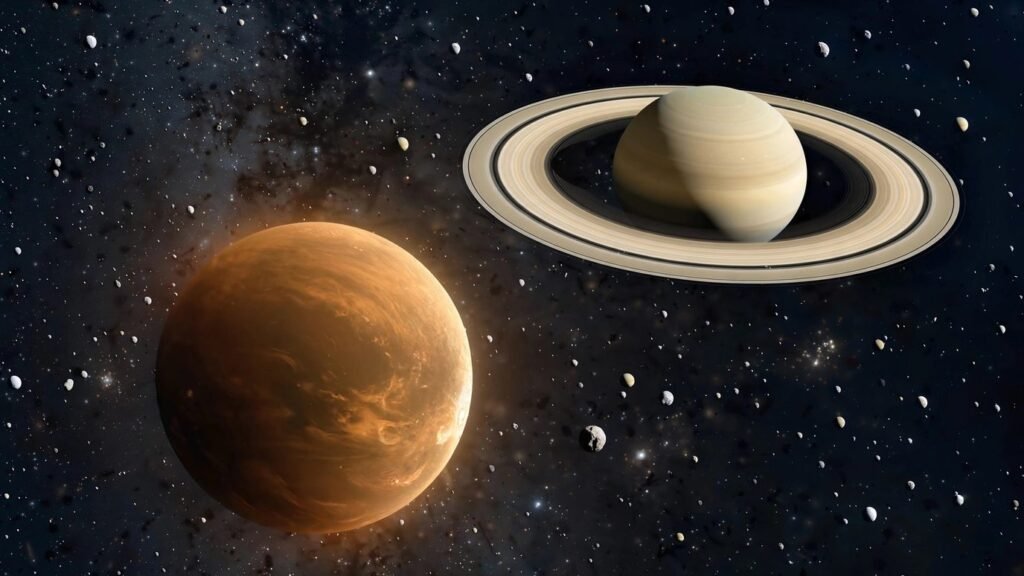
If you grew up with a classroom poster of the solar system, you probably learned that Jupiter was the king of moons. For a long time, that was true. Jupiter’s four big Galilean moons were the stuff of legend, and its total kept climbing as telescopes improved. But the crown has changed hands — and not by a little.
Today, one planet laps the rest of the field so completely that its lead looks almost unfair. Its family of moons includes a world with rivers and lakes, another that sprays salty water into space, and hundreds of tiny, dark rocks that were only spotted in the last few years. So, which planet has the most moons? The answer is Saturn, and the story of how it pulled away is one of the best detective stories in modern astronomy.
The short answer: Saturn has the most moons of any planet in the solar system, with 293 confirmed moons as of 17 June 2026. Jupiter comes second with 95. Most of Saturn’s moons are small, irregular rocks discovered only in the last few years, but its family also includes Titan, the second-largest moon in the solar system.
How Saturn Became the Moon King
Saturn did not always hold this record. As recently as the year 2000, Jupiter was ahead. The turning point came in 2019, when a team led by Scott Sheppard announced twenty new irregular moons of Saturn, pushing its total to 82 and past Jupiter for the first time in decades.
Then came the flood. In May 2023, astronomers announced 62 more Saturnian moons, taking the total to 145 — the first planet ever known to have more than 100 moons. And on 11 March 2025, the International Astronomical Union recognised 128 new moons at once, discovered by a team using the Canada-France-Hawaii Telescope. That single announcement lifted Saturn’s total to 274, nearly three times Jupiter’s count.
The count has kept moving since. Eleven more irregular moons were announced in March 2026, seven more in April 2026, and one new regular moon in June 2026, bringing the confirmed total to 293. Every one of those recent additions is small and faint, but each one is a real, confirmed world orbiting Saturn.
What Actually Counts as a Moon?
This is where things get interesting, because the number depends on where you draw the line. A moon, or natural satellite, is an object that orbits a planet. But Saturn’s rings are themselves made of countless chunks of ice, some hundreds of metres across, each in its own orbit. Do those count?
Astronomers say no. The 293 figure counts only moons with confirmed orbits that are recognised as distinct satellites — it does not include the ring particles or the more than 150 small moonlets embedded inside the rings, which are detected only by the ripples they make in the ring material. There are also hundreds of possible kilometre-sized distant moons that have been seen on just one occasion and not yet confirmed. So the honest answer is that 293 is the confirmed count, and the true number of objects orbiting Saturn is far higher.
The same judgement applies to the other planets. Jupiter’s 95 confirmed moons are counted the same way, so the comparison is fair — and Saturn still wins by a huge margin.
The Moons That Matter Most
Of Saturn’s 293 moons, only 25 are regular satellites: they orbit close to the planet, in roughly the same plane as its equator, and they formed alongside Saturn itself. The other 268 are irregular moons, far-flung objects with tilted, stretched-out orbits that were probably captured long ago or broken off from larger captured bodies.
Here are the members of the family you should actually know:
Titan: A World Like No Other
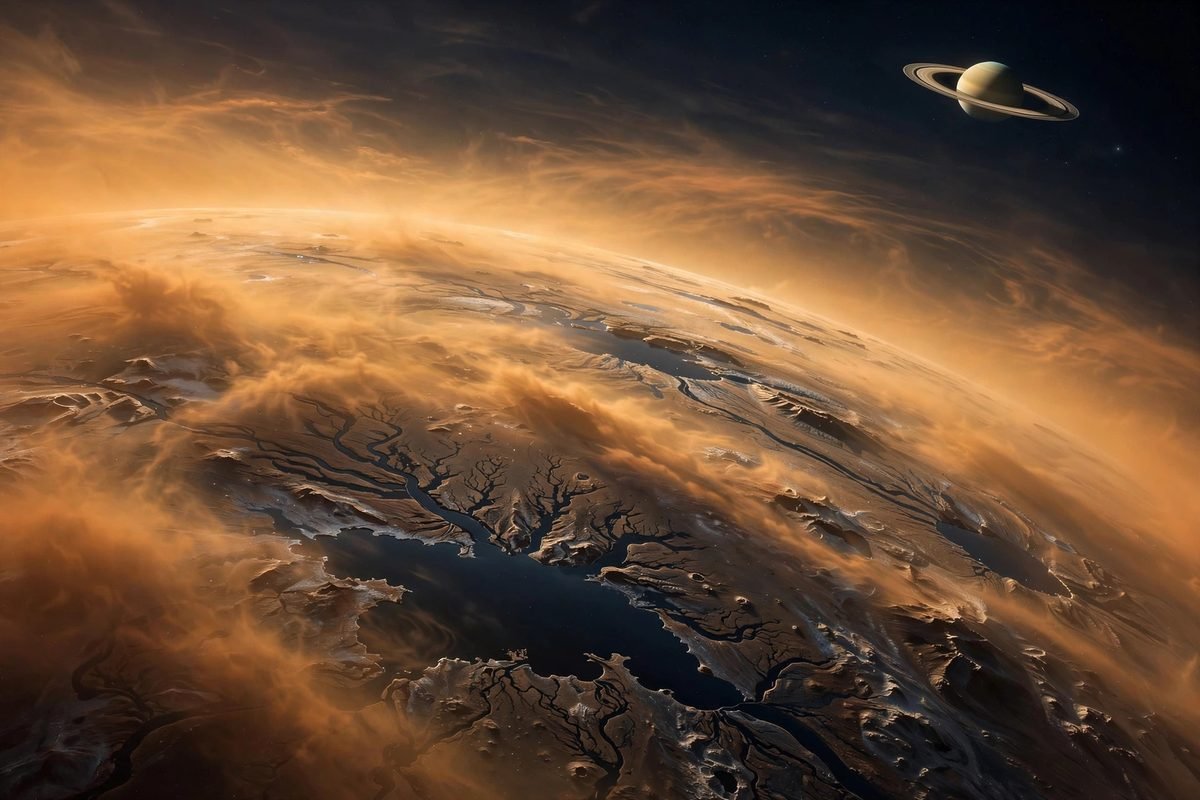
Titan is Saturn’s giant. Larger than the planet Mercury, it is the second-largest moon in the solar system, behind only Jupiter’s Ganymede. It is also the only moon with a thick atmosphere, made mostly of nitrogen, and the only place beyond Earth where liquid rains, flows and pools on the surface — except on Titan, the liquid is methane and ethane, not water. Its lakes, rivers and dunes make it one of the most Earth-like places we know, even though its surface temperature sits around minus 179 degrees Celsius.
Enceladus: The Ice Volcano Moon
Enceladus looks like a quiet snowball, but it is one of the most exciting places in the solar system. Jets of salty water ice spray from cracks at its south pole, feeding Saturn’s E ring. Beneath its frozen crust lies a global salty ocean, kept liquid by heat from Saturn’s gravity squeezing the moon as it orbits. That ocean makes Enceladus one of the best places to look for life beyond Earth.
Rhea, Iapetus, Dione and Tethys
Rhea is Saturn’s second-largest moon, a heavily cratered ball of ice. Iapetus is famous for its two-tone face: one hemisphere is dark as coal, the other bright as snow, plus a mountain ridge around its equator that is among the tallest in the solar system. Dione and Tethys are bright, cratered ice worlds, and Tethys hosts Ithaca Chasma, a canyon system so large it stretches three-quarters of the way around the moon.
Mimas: The Death Star Moon
Mimas is small, but it is unforgettable. A giant impact crater called Herschel dominates one face, giving the moon an uncanny resemblance to the Death Star from Star Wars. The impact that made the crater nearly shattered Mimas entirely.
Why Does Saturn Have So Many Moons?
Three things work in Saturn’s favour. First, it is massive — the second-largest planet — so its gravity reaches far out into space and can hold on to passing objects. Second, it sits far from the Sun, where the Sun’s disruptive tides are weaker, so captured bodies are less likely to be stripped away. Third, its irregular moons appear to be fragments of a few larger bodies that were captured and then smashed apart by collisions a few hundred million years ago, scattering dozens of pieces into similar orbits.
Jupiter, for all its size, is closer to the Sun and to the asteroid belt, and its irregular moons are fewer and harder to find against the glare. Uranus has 28 confirmed moons and Neptune 16, but both ice giants have been visited only once, by Voyager 2, so their small-moon populations are almost certainly undercounted. Even so, neither is close to challenging Saturn.
Planet-by-Planet Moon Count
| Planet | Confirmed moons | Largest moon |
|---|---|---|
| Saturn | 293 | Titan |
| Jupiter | 95 | Ganymede |
| Uranus | 28 | Titania |
| Neptune | 16 | Triton |
| Mars | 2 | Phobos |
| Earth | 1 | The Moon |
| Venus | 0 | — |
| Mercury | 0 | — |
Together, Saturn and Jupiter account for the overwhelming majority of all known planetary moons. Mercury and Venus, the two planets closest to the Sun, have none at all — the Sun’s gravity makes it very hard for them to hold on to a satellite.
How Astronomers Find Moons You Cannot See
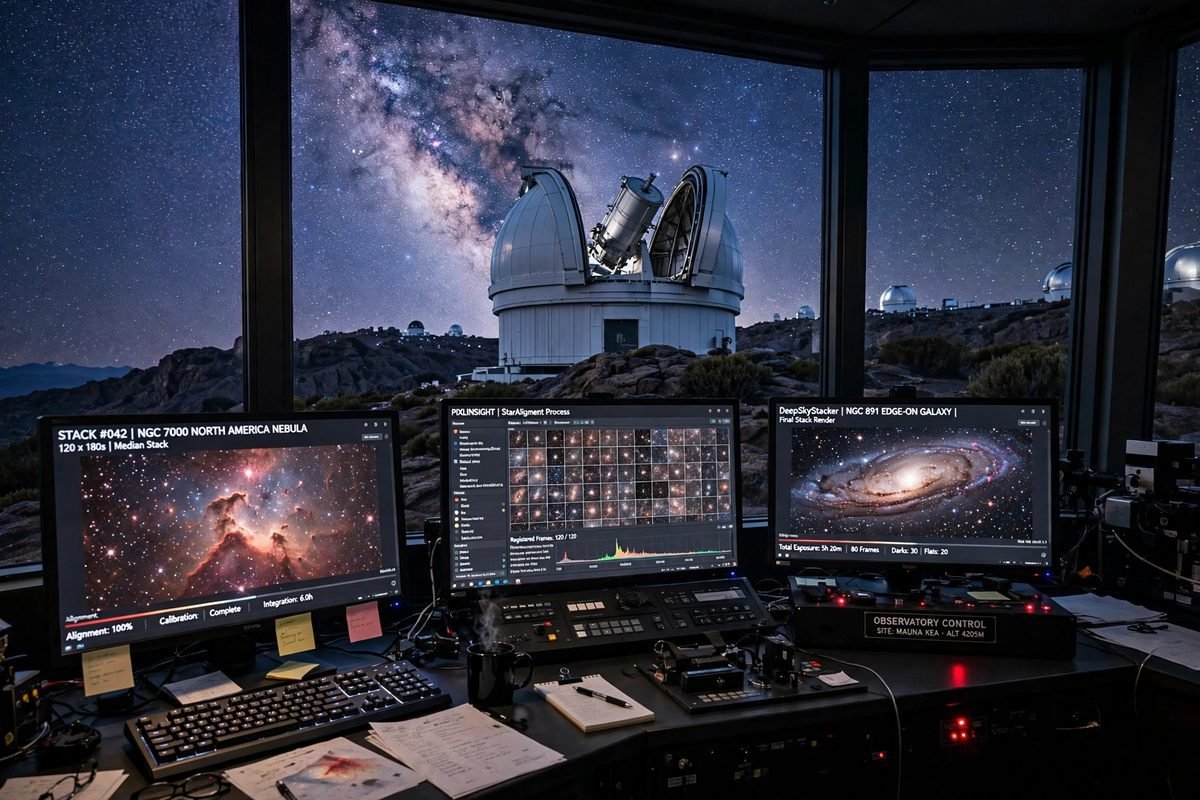
Most of Saturn’s newest moons are only a few kilometres across and incredibly faint, with apparent magnitudes around 25 to 27 — far too dim to spot in a single telescope image. Astronomers find them with a trick called “shift and stack”: they take many long-exposure images of the same patch of sky, shift each one to follow Saturn’s motion, and add them together. A moon that follows Saturn brightens in the combined image, while background stars smear out and fade.
The 128 moons announced in March 2025 were found this way, using the Canada-France-Hawaii Telescope on Mauna Kea between 2019 and 2023. Many of them were then traced back to earlier observations from 2004 to 2021, which is why their discovery dates stretch back years. The technique keeps improving, which is exactly why Saturn’s count will probably keep rising.
Will Any Planet Ever Catch Saturn?
Probably not any time soon. Astronomers estimate that Saturn has around 150 irregular moons larger than about 2.8 kilometres, and the true population at smaller sizes could be far larger. Jupiter would need to more than triple its count just to draw level. New surveys will certainly find more Jovian moons, but Saturn’s head start is enormous, and the same surveys will find Saturnian moons too.
The more interesting question is whether the record will keep growing at all. The answer is almost certainly yes: as telescopes get more sensitive and image-stacking software gets better, the faint outer reaches of Saturn’s system will keep giving up new members. The “moon king” is not likely to abdicate.
Can You See Saturn’s Moons Yourself?
You do not need a spacecraft to meet Saturn’s family. Through a small telescope, Titan is easy — it shines like a bright star near the planet. With a larger telescope under dark skies, you can also pick out Rhea, Tethys, Dione, Enceladus, Iapetus and Mimas. Iapetus is a fun challenge because it fades dramatically as it orbits: it is much brighter on one side of Saturn than the other, thanks to that dark hemisphere.
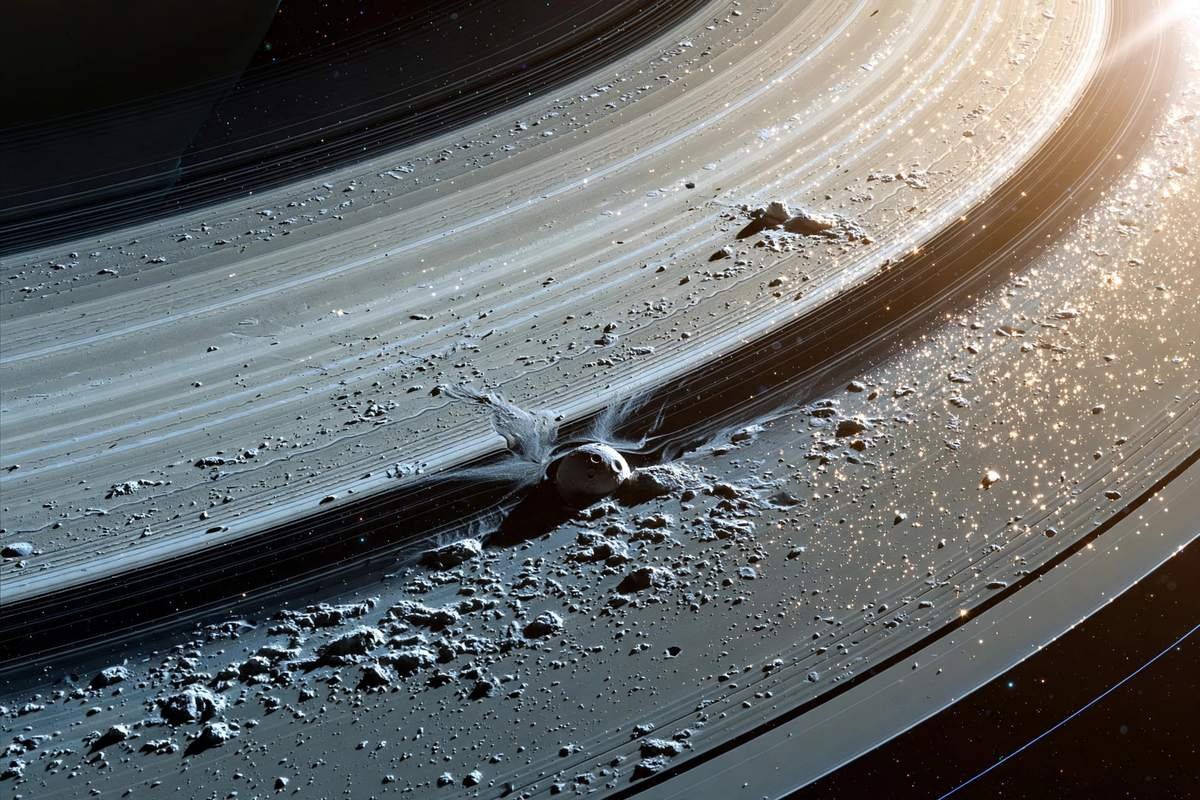
Saturn itself is the real show, of course. Its rings, spanning roughly 280,000 kilometres from edge to edge yet only tens of metres thick in places, are the most beautiful sight in the solar system through a telescope. If you want to dive deeper into those rings, our guide to the largest ring system in the solar system is a good next read — and for a change of pace, the team at 9bio.co.uk covers everything from everyday explainers to science guides in the same friendly style.
Frequently Asked Questions
Which planet has the most moons in 2026?
Saturn, with 293 confirmed moons as of June 2026. The count rose from 274 in March 2025 after 19 more moons were announced in 2026.
How many moons does Jupiter have?
Jupiter has 95 confirmed moons, making it second behind Saturn. Its four largest — Io, Europa, Ganymede and Callisto — are known as the Galilean moons.
What is Saturn’s biggest moon?
Titan. It is larger than Mercury, has a thick nitrogen atmosphere, and is the only moon in the solar system with standing liquid on its surface.
How many moons does Saturn have in total?
293 moons have confirmed orbits as of 17 June 2026. Hundreds more tiny objects orbit Saturn but are unconfirmed or are classed as ring moonlets rather than moons.
Why does Saturn have more moons than Jupiter?
Saturn’s greater distance from the Sun lets it hold on to captured objects more easily, and many of its irregular moons are fragments of a few larger bodies that broke apart in collisions, multiplying the count.
Does Earth have more than one moon?
Earth has one permanent natural moon. A few small asteroids are sometimes called “quasi-moons” because they share Earth’s orbit, but they are not true moons.
Which planet has no moons?
Mercury and Venus have no moons at all. Their closeness to the Sun makes it very difficult for them to capture and keep a satellite.
Final Thoughts
Saturn’s record is not just a trivia answer — it is a reminder of how fast our picture of the solar system is changing. A generation ago, Saturn had a dozen known moons. Today it has 293, and the number is still climbing. The next time someone asks which planet has the most moons, you can answer with confidence: Saturn, the moon king, and its lead is growing, not shrinking.
It is also worth remembering that every new moon tells us something about the early solar system. The irregular moons are survivors — fragments of ancient collisions, captured wanderers, and pieces of a history that played out billions of years ago. Counting them is not stamp collecting. Each confirmed orbit sharpens our picture of how planets grow, how moons are born, and how crowded our cosmic neighbourhood really is.
Read Also: Iowa Men’s Basketball: History, Stars, and What’s Next
For more everyday explainers written in the same plain style, visit the team at 9bio.co.uk, and if you enjoy science and space stories, The Modern Post also publishes regular guides worth a browse at themodernpost.co.uk.
