
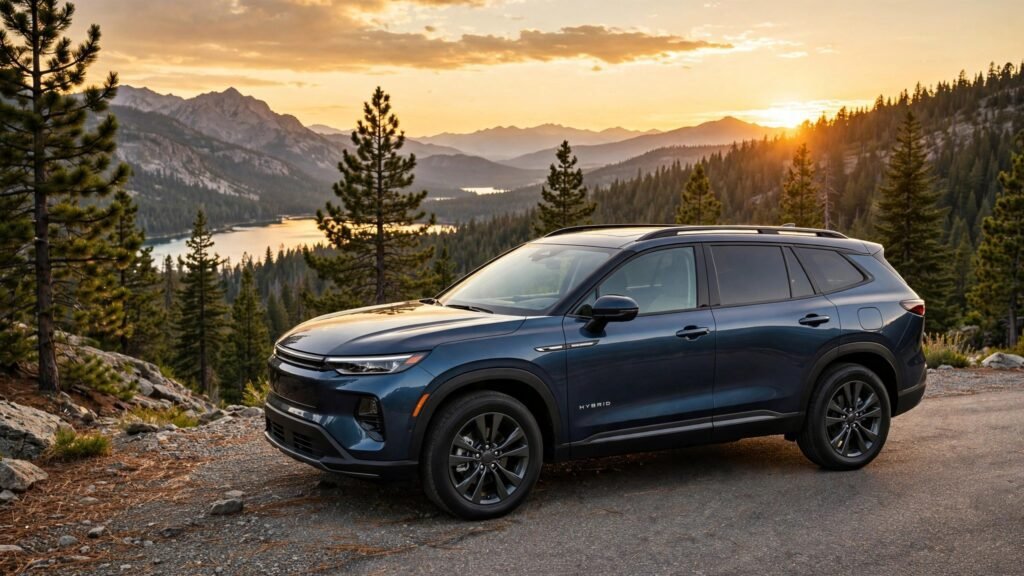
Buying a three-row SUV usually means accepting a trade-off: room for the whole family in exchange for fuel economy that makes you wince at the pump. The Toyota Highlander Hybrid exists to challenge that assumption. It is the same mid-size, three-row family SUV as the standard Highlander, but with a gasoline-electric hybrid powertrain that pushes its EPA fuel economy into the mid-30s — roughly the territory of a small sedan, in a vehicle that seats seven or eight people.
That sounds almost too good to be true, which is exactly why it is worth a careful look. The Highlander Hybrid gives up some towing muscle compared with its turbocharged gas sibling, its third row is strictly kid-and-occasional-adult territory, and the hybrid powertrain costs more up front. This guide walks through all of it: how the hybrid system works, real-world fuel economy, the trim lineup and rough pricing, how it drives, how reliable it is, and how it stacks up against rivals like the Kia Sorento Hybrid, Hyundai Santa Fe Hybrid and Honda Pilot.
The short answer: The Toyota Highlander Hybrid is one of the most fuel-efficient three-row SUVs you can buy, with EPA ratings around 35 mpg combined — roughly 10 mpg better than the gas-only Highlander. It pairs a 2.5-liter four-cylinder engine with electric motors for a combined 243 horsepower, seats up to eight, tows up to 3,500 pounds, and carries Toyota’s famously strong hybrid reliability record. Prices start in the upper $40,000s and climb into the mid-$50,000s depending on trim; check Toyota’s official site or a dealer for current exact pricing, since figures shift with model year updates. It is the right pick for families that want three rows and genuinely low running costs, and the wrong pick if maximum towing or a truly adult-sized third row is the priority.
What Is the Toyota Highlander Hybrid, Exactly?
The Highlander Hybrid is simply the electrified version of Toyota’s mid-size three-row SUV. Nothing about its mission differs from the regular Highlander: it is a family hauler first, a commuter second, and an off-roader in only the mildest sense. The hybrid badges change one thing — the powertrain — and that single change ripples through fuel economy, driving feel and long-term running costs.
Toyota has been building hybrid vehicles longer than almost anyone in the business, and the Highlander Hybrid benefits from all of that experience. The current generation pairs a 2.5-liter four-cylinder gasoline engine with two electric motor-generators. Toyota quotes a combined system output of 243 horsepower, delivered through an electronically controlled continuously variable transmission.
One thing worth knowing: for the 2026 model year, all Highlander Hybrid trims come with electronic on-demand all-wheel drive as standard. A small dedicated electric motor drives the rear axle when sensors detect slip, so there is no mechanical driveshaft running the length of the vehicle. It is a clean, lightweight way to get all-weather traction, though it is tuned for slippery roads rather than serious off-road work.
The Highlander Hybrid also serves as the efficiency flagship of the Highlander lineup. The conventional gas Highlander now uses a turbocharged 2.4-liter four-cylinder making around 265 horsepower — stronger and better for towing, but rated in the mid-20s for combined fuel economy. The hybrid’s whole reason for existing is to close that gap, and it does so dramatically.
How the Hybrid System Actually Works
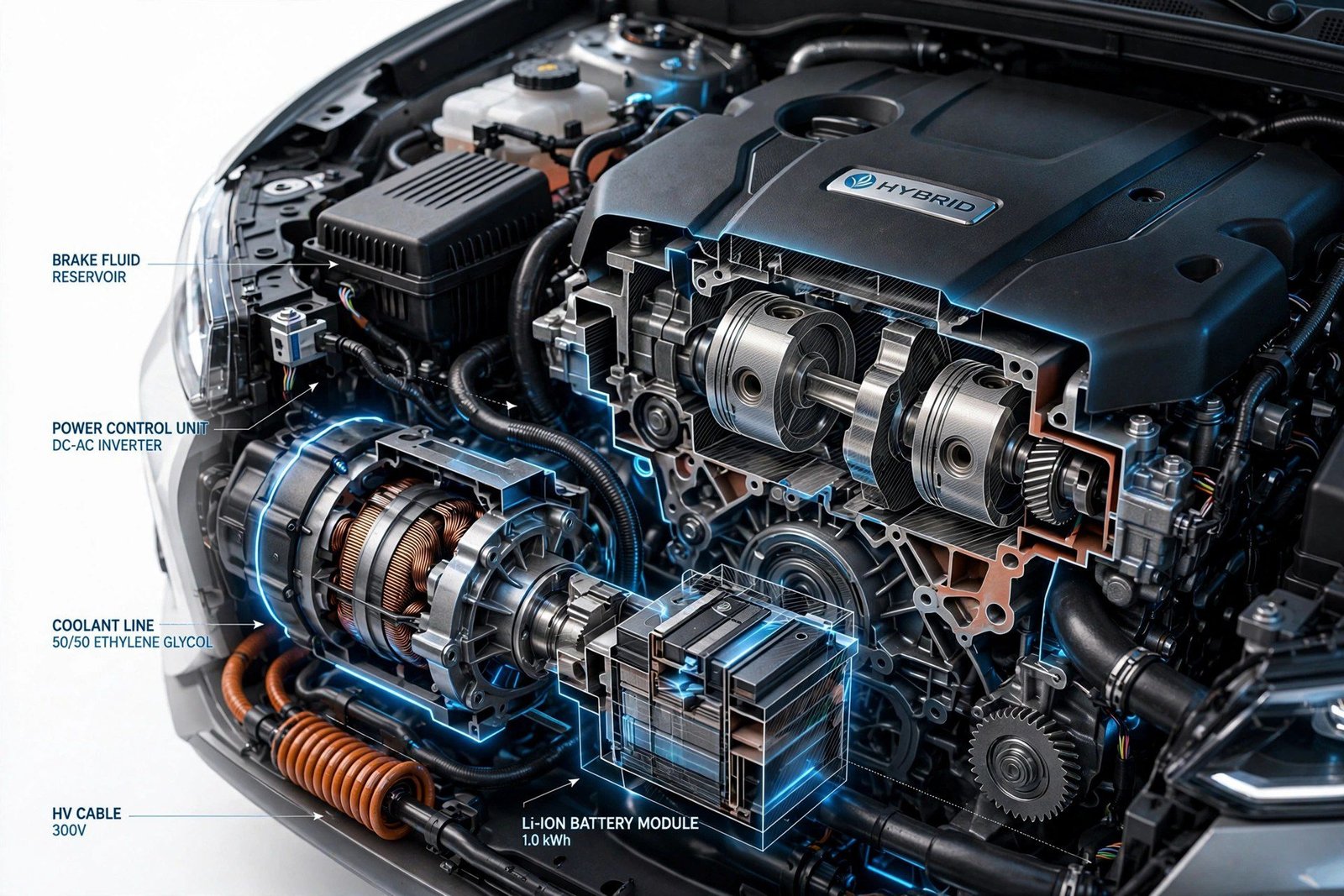
If “hybrid” still sounds mysterious, the Highlander Hybrid is a good example of how straightforward the technology has become.
The power split, in plain English
The 2.5-liter gasoline engine does most of the heavy lifting at steady highway speeds, where it is at its most efficient. Around town and at low speeds, the electric motors take over more often — sometimes moving the vehicle on electricity alone for short stretches, like pulling away from a stop sign or creeping through a parking lot. When you slow down, the motors reverse and act as generators, converting braking energy back into electricity stored in the battery. Toyota calls this regenerative braking, and it is the single biggest reason hybrids get such good city fuel economy.
Drive modes
The Highlander Hybrid offers several drive modes — typically Normal, Eco, Sport and EV — that adjust how the powertrain responds. Eco softens throttle response to save fuel, Sport sharpens it at the cost of efficiency, and EV mode lets you creep on electric power alone at low speeds when the battery has enough charge. Most owners settle on Normal for daily driving and never think about it again.
Battery and reliability
The battery pack is a sealed unit mounted under the floor, and Toyota’s hybrid batteries have one of the best longevity records in the industry. They are covered by a long warranty, and replacement is far less common than the internet’s worst-case stories suggest. This is the same hybrid know-how that has carried the Prius for a quarter of a century — scaled up to a family SUV.
Fuel Economy: The Reason You Are Here
Let us be direct: fuel economy is why the Highlander Hybrid exists, and it is where the vehicle shines brightest.
The EPA numbers
The Highlander Hybrid carries EPA ratings of roughly 35–36 mpg in the city and around 34–35 mpg on the highway, depending on trim, for a combined figure of about 35 mpg. One detail surprises first-time hybrid buyers: city economy is as good as or better than highway economy. That is the reverse of a conventional SUV, and it comes down to regenerative braking — stop-and-go driving recovers energy that would otherwise be wasted as brake heat.
For comparison, the gas-only Highlander’s combined rating sits in the mid-20s. So the hybrid’s roughly 10-mpg combined advantage is one of the largest gaps between any gas and hybrid versions of the same vehicle on the market.
What owners actually get
EPA figures are lab-tested estimates, and real-world mileage varies with driving style, weather, tire choice and load. Highlander Hybrid owners commonly report combined figures in the low-to-mid 30s, which tracks the EPA rating well. Cold weather and heavy highway cruising with a full load will pull numbers down; gentle suburban driving can nudge them up. The honest takeaway: if you drive a mix of city and highway miles, expect the mid-30s, and you will not be far off.
How much money that saves
A rough illustration: over 15,000 miles a year, a vehicle at 35 mpg uses about 430 gallons of gasoline; at 24 mpg it uses about 625 gallons. At current pump prices that is a difference of several hundred dollars a year, compounding over a typical ownership period. High-mileage drivers benefit most, because the savings accumulate fastest for them. That said, the hybrid costs more up front, so the payback math depends on how much you drive and how long you keep the vehicle.
Toyota Highlander Hybrid Trims and Pricing (2026)
Toyota has simplified the Highlander Hybrid lineup in recent years. For 2026, the entry-level LE hybrid is gone, and the range runs through a familiar ladder of trims:
XLE
The starting point for the 2026 Highlander Hybrid. It covers the essentials generously — three-row seating, the full hybrid powertrain, Toyota Safety Sense driver-assistance tech, a large touchscreen, power tailgate and comfortable cloth or synthetic-leather seating. Pricing for the entry hybrid starts in the upper $40,000s. For most families, this is the sweet spot: the core hybrid experience without the luxury-tax feel.
XLE Nightshade
Same equipment as the XLE but with blacked-out exterior styling details — dark wheels, black trim, a moodier look. Pricing sits just above the standard XLE, roughly in the upper $40,000s to low $50,000s. Buy it if the styling speaks to you; mechanically it is identical.
Limited
A meaningful step up: leather-trimmed seats, a larger infotainment display, ventilated front seats, a panoramic moonroof, upgraded audio and more chrome and comfort touches. Expect pricing in the low-to-mid $50,000s. This is the trim for buyers who want the hybrid’s efficiency wrapped in a genuinely premium cabin.
Limited 25th Edition
A special celebratory edition with unique appearance details and bundled feature content. Pricing lands in the mid-$50,000s. Special editions hold a certain appeal, but their value depends on how much you care about the exclusive styling cues.
Platinum
The flagship: everything Limited offers plus the highest-end materials, a head-up display, rain-sensing wipers, a panoramic view monitor and the quietest, most feature-dense cabin in the lineup. Pricing stretches into the mid-to-upper $50,000s, making it a genuinely expensive mainstream SUV.
A note on pricing
Exact MSRP figures change with model-year updates, packages and regional fees, so treat any number you see online as a snapshot. A reliable rule of thumb: budget from the upper $40,000s at the entry end to the mid-$50,000s for a loaded Platinum. Always confirm current pricing on Toyota’s official site or with a local dealer before making decisions — and compare the hybrid’s premium against the gas model at the same trim level to see what the efficiency is actually costing you.
| Trim | Rough price band | Who it’s for |
|---|---|---|
| XLE | Upper $40,000s | Value-focused families; the efficiency without the frills |
| XLE Nightshade | Upper $40,000s–low $50,000s | Style-first buyers who like the blacked-out look |
| Limited | Low–mid $50,000s | Premium comfort seekers; leather and tech without the flagship price |
| Limited 25th Edition | Mid-$50,000s | Enthusiasts drawn to special-edition exclusivity |
| Platinum | Mid–upper $50,000s | Buyers who want every feature Toyota offers |
Interior, Seating and Cargo
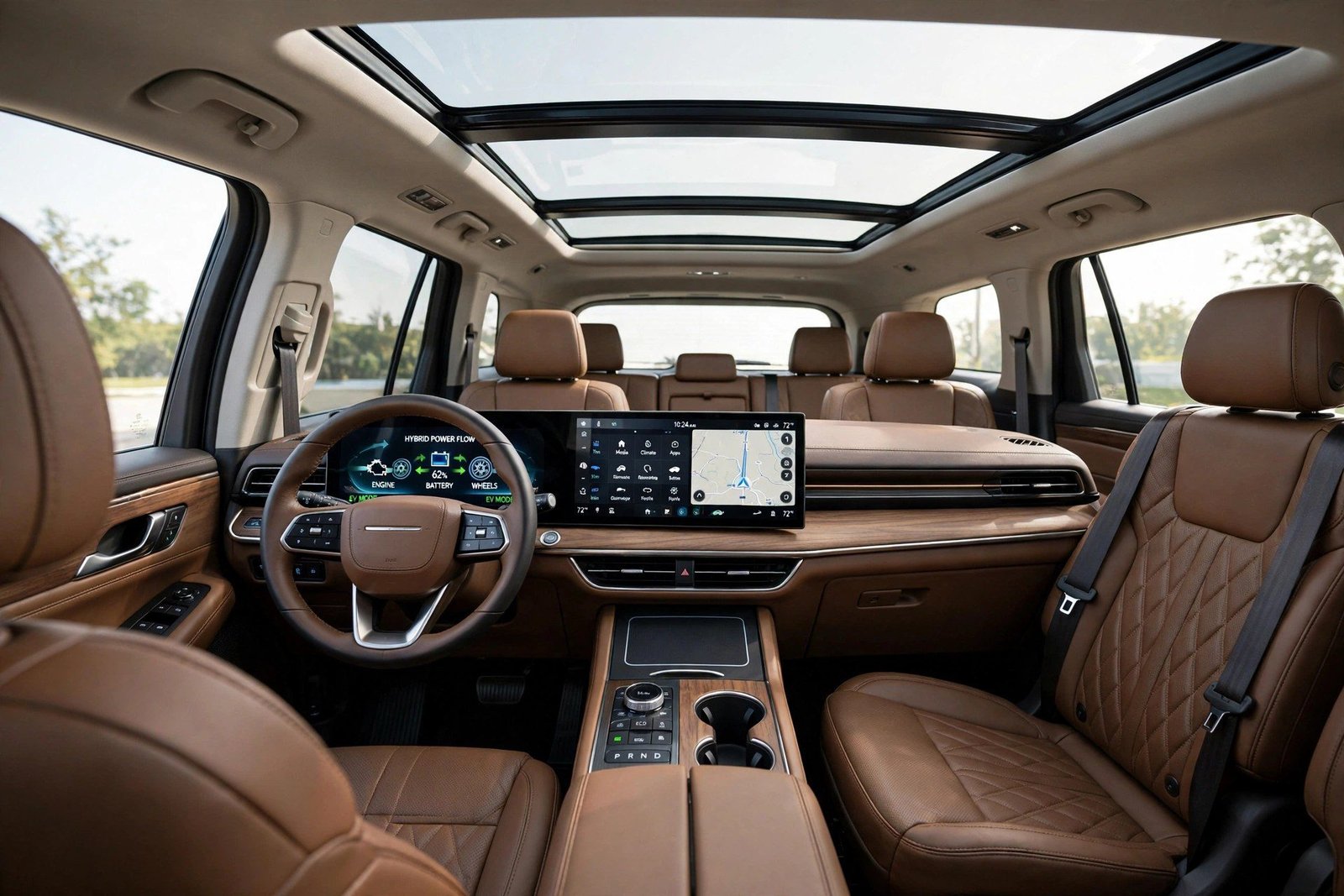
The Highlander Hybrid’s cabin is honest, well-built family transport. Materials improve as you climb trims, and the overall feel is durable rather than dazzling — which suits a vehicle that will spend years full of car seats, sports gear and road-trip snacks.
Seating
Most Highlander Hybrids seat eight in a 2-3-3 layout, with a second-row bench. Higher trims offer second-row captain’s chairs, which drops capacity to seven but makes the third row far easier to reach and gives second-row passengers a more comfortable perch. The first two rows are genuinely comfortable for adults, with good headroom and legroom. The third row is best described as kid-friendly: fine for children and workable for smaller adults on shorter trips, but tight for full-size adults over long distances. This is normal for the segment, but buyers expecting a truly spacious third row should look at larger vehicles or minivans.
Cargo
With all three rows up, cargo space behind the third row is modest — enough for groceries or a few small bags, roughly on par with rivals. Fold the third row flat and the Highlander becomes a proper cargo hauler; fold the second row too and you get a flat, cavernous load floor suitable for furniture runs. The power tailgate (standard on most trims) and hands-free kick sensor (available) are small conveniences that matter a lot when your hands are full.
Tech and infotainment
A large central touchscreen handles navigation, media and vehicle settings, with wireless smartphone integration on higher trims. Physical climate controls remain, which is a genuine usability plus — nobody wants to hunt through menus to adjust the fan. USB ports are scattered through all three rows, and higher trims add wireless charging, a head-up display and a digital rearview mirror. Toyota’s infotainment has improved considerably in recent years, though it still trails the flashiest Korean rivals for visual flair.
How It Drives: Performance and Towing
With 243 combined horsepower moving a vehicle of this size, the Highlander Hybrid is best described as adequate rather than athletic. Around town, the electric motor’s instant low-speed torque makes it feel responsive off the line — merging into traffic and pulling away from lights is easy and quiet. On the highway, passing at speed requires planning; the powertrain will downshift (in CVT terms, raise engine revs) and get the job done, but it does so with more noise and less urgency than the turbocharged gas Highlander, which makes about 265 horsepower and notably more torque.
Ride quality is a strong suit: composed, quiet and comfortable, with steering that is light and accurate enough for suburban duty. This is not a driver’s SUV, and it does not pretend to be. It is a comfortable one, and that is what its buyers want.
Performance
Zero-to-60 times land in the mid-7-second range — unremarkable on paper, perfectly fine in practice. The hybrid system delivers its best work in the 0–40 mph zone where electric torque does the heavy lifting.
Towing
The Highlander Hybrid is rated to tow up to 3,500 pounds when properly equipped. That covers small boats, jet skis, pop-up campers and utility trailers — but not large travel trailers or heavy car haulers. If towing is central to your plans, the gas Highlander’s turbo engine tows more and is the better tool for the job. Be realistic about your trailer’s weight before choosing the hybrid purely for fuel savings.
Safety Ratings and Driver Assistance
Safety is one of the Highlander’s quiet strengths. Every Highlander Hybrid comes standard with Toyota Safety Sense, the brand’s suite of driver-assistance features: pre-collision braking with pedestrian detection, adaptive cruise control, lane-departure alert with steering assist, lane tracing assist, automatic high beams and road-sign recognition. Blind-spot monitoring and rear cross-traffic alert are included on most trims, and higher trims add a panoramic camera system that makes parking a three-row SUV far less stressful.
The Highlander has historically earned strong crash-test results from the major US testing organizations, and its combination of standard active safety tech across all trims means even the base hybrid is well protected.
Reliability: Toyota’s Strongest Card
If there is one reason the Highlander Hybrid outsells many of its rivals, it is this: people trust Toyota hybrids. The brand has built more hybrid vehicles than anyone else, the Highlander Hybrid shares its core technology with the Prius family, and owner-satisfaction and reliability surveys consistently rank it near the top of the three-row segment.
The hybrid-specific components — battery, motors, power electronics — are the parts buyers worry about most, and they are the parts Toyota has the longest track record with. Battery failures outside of warranty are rare, and when they do occur, replacement costs have fallen considerably over the years. The conventional parts of the vehicle (suspension, electronics, interior) are mainstream Toyota fare: not flawless, but among the least troublesome in the class.
The honest caveat: no vehicle is maintenance-free. The Highlander Hybrid still needs oil changes, tires, brakes and the occasional repair. But as a long-term ownership bet, few three-row SUVs offer a better track record.
Toyota Highlander Hybrid vs. the Competition
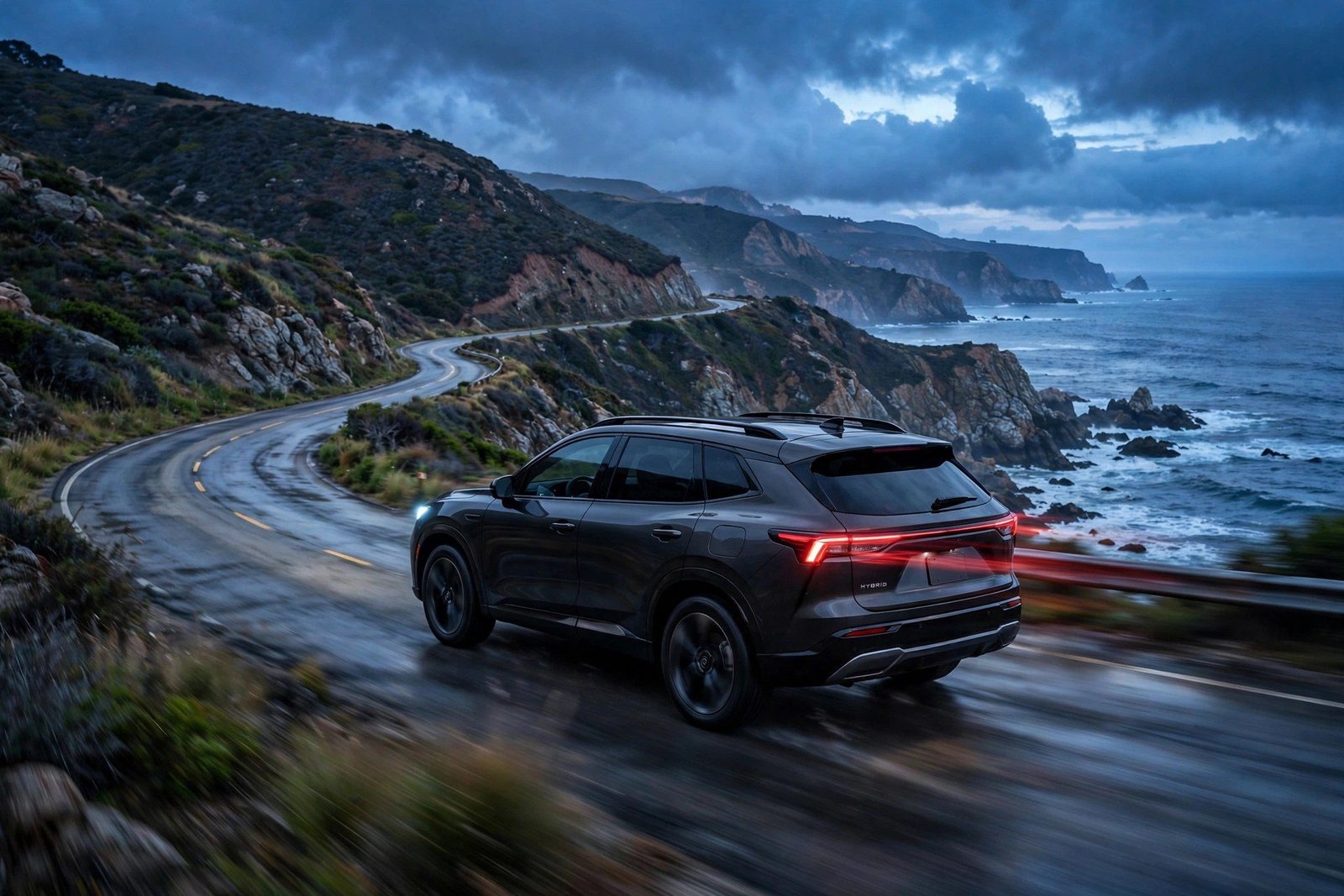
The three-row hybrid SUV segment has grown crowded. Here is how the Highlander Hybrid compares with its most direct rivals.
| Toyota Highlander Hybrid | Kia Sorento Hybrid | Hyundai Santa Fe Hybrid | Honda Pilot | |
|---|---|---|---|---|
| Seating | 7–8 | 6–7 | 6–7 | 7–8 |
| Hybrid available | Yes | Yes | Yes | No (gas only) |
| Approx. combined mpg (hybrid) | ~35 | ~34–37 | ~34–36 | N/A (~20–22 gas) |
| Combined power (hybrid) | 243 hp | ~227 hp | ~231 hp | 285 hp (gas V6) |
| Max towing | 3,500 lb | 3,500 lb (hybrid) | 3,500 lb (hybrid) | 5,000 lb |
| Reliability reputation | Excellent | Good, improving | Good, improving | Excellent |
Kia Sorento Hybrid and Hyundai Santa Fe Hybrid
The Korean twins are the Highlander Hybrid’s closest rivals on efficiency, matching it closely on combined mpg and undercutting it on price at equivalent trims, with bolder styling and more modern interiors. Where the Highlander answers back is reliability reputation and resale value — Toyota’s hybrid track record is longer, and Highlanders historically depreciate more slowly.
Honda Pilot
The Pilot is the Highlander Hybrid’s great non-hybrid rival: a superb family SUV with a smooth V6, more power and a more adult-friendly third row — but no hybrid option and fuel economy in the low 20s combined. If you drive modest annual mileage, the Pilot’s driving character may win you over. If fuel costs matter, the Highlander Hybrid’s roughly 10-mpg advantage is decisive.
Ford Explorer and Chevrolet Traverse
Worth a mention for shoppers cross-shopping broadly: both offer three rows and strong utility, the Explorer with engaging driving dynamics and the Traverse with one of the roomiest cabins in the class. Neither currently matches the Highlander Hybrid’s fuel economy, though, and both trail Toyota on long-term reliability reputation.
For broader takes on family vehicles and car-buying advice, the team at Daily Scope 67 covers automotive topics alongside their usual mix of explainers and guides — worth a browse while you research.
Pros and Cons
Pros
- Outstanding fuel economy for a three-row SUV — around 35 mpg combined, roughly double what big three-rows managed a generation ago.
- Toyota hybrid reliability — the longest track record in the business, with strong resale values to match.
- Standard all-wheel drive on 2026 hybrid trims, with no efficiency penalty worth worrying about.
- Comfortable, quiet ride tuned for family duty, with generous standard safety tech.
- Flexible cargo — flat-folding second and third rows create serious hauling space when passengers are not aboard.
Cons
- Modest power — 243 combined horsepower is adequate, but highway passing and loaded hill climbs feel strained next to turbo or V6 rivals.
- Limited towing — 3,500 pounds maximum; the gas Highlander tows more.
- Tight third row — fine for kids, cramped for adults on long trips.
- Hybrid price premium — you pay more up front than the equivalent gas Highlander, so light drivers take longer to break even.
- Dull to drive — if you enjoy driving, rivals like the Mazda CX-90 or Ford Explorer offer more character.
Who Should Buy the Toyota Highlander Hybrid?
Buy it if: you want three rows of seating with the lowest possible fuel bills; you drive high annual mileage and will recoup the hybrid premium quickly; you value Toyota’s reliability record and strong resale; your towing needs stay under 3,500 pounds; or you simply want the peace of mind of a proven hybrid system.
Skip it if: you regularly tow heavy trailers; you need a genuinely adult-sized third row; you want spirited performance; you drive very few miles a year (the gas Highlander’s lower price may serve you better); or you are drawn to the bolder styling and lower prices of the Korean hybrid rivals.
Frequently Asked Questions
Is the Toyota Highlander Hybrid worth it over the gas model?
For most buyers who drive average or above-average mileage, yes. The hybrid’s roughly 10-mpg combined advantage saves several hundred dollars a year in fuel, and Toyota hybrids hold their value exceptionally well. Light drivers who rarely leave the suburbs may take many years to recoup the hybrid’s higher purchase price — run the numbers on your own annual mileage before deciding.
What is the real-world mpg of the Toyota Highlander Hybrid?
Owners commonly report combined figures in the low-to-mid 30s, closely matching the EPA rating of about 35 mpg combined. City driving often equals or beats the highway figure thanks to regenerative braking. Expect variation with weather, load, tires and driving style — but mid-30s is a realistic everyday expectation.
How long does the Highlander Hybrid battery last?
Toyota’s hybrid batteries are among the most durable in the industry, and many last well beyond 150,000 miles with no issues. They are covered by a long factory warranty, and replacement — while expensive — is uncommon. This is the same fundamental technology Toyota has refined since the original Prius.
Can the Highlander Hybrid tow a camper?
It can tow up to 3,500 pounds, which covers pop-up campers, small boats, jet skis and light utility trailers. Larger travel trailers exceed its rating. If towing a full-size camper is the plan, the gas Highlander’s turbo engine or a body-on-frame SUV is the better choice.
Does the Highlander Hybrid need to be plugged in?
No. It is a conventional (self-charging) hybrid, not a plug-in. The battery charges itself through regenerative braking and the gasoline engine — you never plug it in, and it drives exactly like a normal automatic SUV.
Which Highlander Hybrid trim is the best value?
The XLE is the value pick for most families: it includes the full hybrid powertrain, three-row seating and Toyota’s complete safety suite at the lowest entry price, starting in the upper $40,000s. Step up to Limited or Platinum only if leather, premium audio and luxury features genuinely matter to you.
Is the Toyota Highlander Hybrid reliable?
Yes — it is consistently among the most reliable three-row SUVs you can buy. Toyota’s hybrid system has a decades-long track record, owner satisfaction is high, and long-term ownership costs (beyond fuel) are low. It is one of the safest bets in the segment for buyers planning to keep a vehicle for many years.
Conclusion
The Toyota Highlander Hybrid makes a simple, compelling promise: three rows of family seating with the fuel economy of a much smaller vehicle. At around 35 mpg combined, it delivers on that promise more completely than almost any rival, and it wraps the efficiency in Toyota’s best-in-class hybrid reliability record.
It is not the most powerful three-row SUV, not the roomiest in the third row, and not the best tower. But for the buyer it is actually designed for — a family that wants dependable, low-cost, low-stress transportation for years on end — those compromises are easy to accept. If your priorities are fuel economy, reliability and resale value, the Highlander Hybrid belongs at the very top of your shortlist. Confirm current pricing with a dealer, take the XLE for a test drive, and judge the powertrain’s manners for yourself — the numbers only tell half the story.
Read Also: How to Learn Astronomy from Scratch (2026 Beginner’s Guide)

1 Comment