
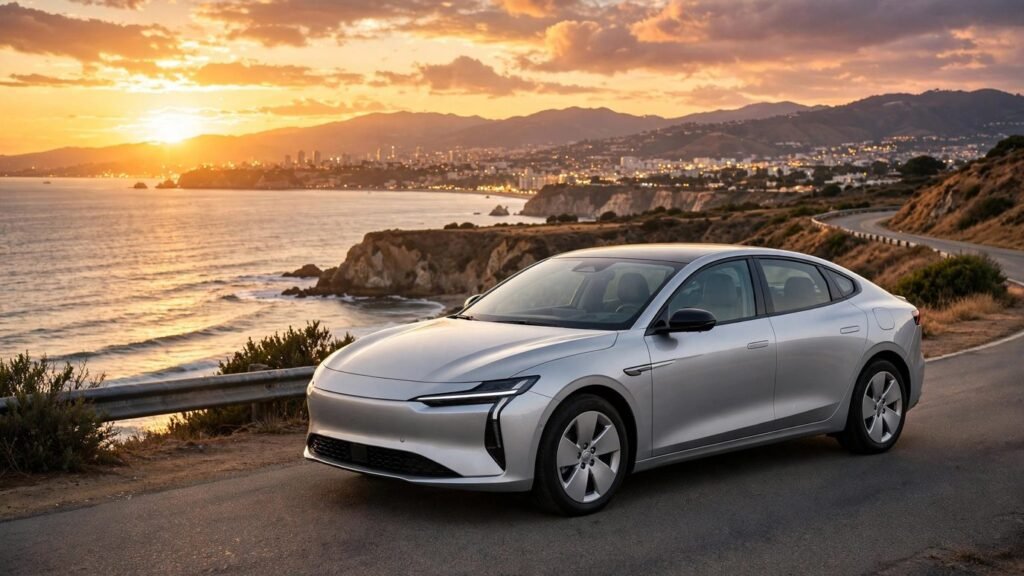
You can walk into almost any car park on earth and spot a Honda within seconds. A Civic threading through city traffic, a CR-V loaded with kids and camping gear, an Accord gliding down the motorway — they’re everywhere, and that’s no accident. Few brands have earned the quiet, stubborn trust that Honda has. It never shouts for attention the way some car brands do, yet millions of buyers choose one every year, and they keep coming back.
So what exactly is Honda, and what makes it such a durable force in a cutthroat industry? In this guide, we’ll trace the brand from its unlikely beginnings as a tiny Japanese motorcycle workshop to a global giant that builds cars, bikes, jets, and robots. We’ll walk through the 2026 model lineup, the hybrid and EV strategy, the legendary reliability record, and how Honda compares to Toyota and Hyundai. And if you’re thinking of buying one, we’ll help you decide whether new or used makes more sense for your wallet.
The short answer: Honda is a Japanese multinational founded in 1948 by engineer Soichiro Honda. It is the world’s largest motorcycle maker and one of the largest car manufacturers, famous above all for reliability — the Civic, Accord, and CR-V are its icons. In 2026, the lineup runs from the Civic and Accord to the CR-V, Pilot, Odyssey, and Ridgeline, with hybrids across the core range, the all-electric Prologue SUV, and the revived Prelude hybrid. Honda consistently ranks among the top brands for long-term dependability, making it one of the safest bets in the car market.
What is Honda?
Honda Motor Co., Ltd. is a Japanese multinational conglomerate headquartered in Tokyo, Japan. Most people know it as a car company, but that only tells part of the story. Honda has been the world’s largest motorcycle manufacturer since 1959, and it is also the world’s largest manufacturer of internal-combustion engines by volume — building more than 14 million engines a year, for everything from cars and bikes to lawnmowers, generators, and marine outboards.
On the automotive side, Honda is one of the world’s major carmakers — the second-largest Japanese automaker and the eighth largest in the world. Its cars are sold through more than 1,000 independent dealers in the US alone, and Honda has been building vehicles in America for over 40 years; in 2025, around 99% of the Honda vehicles sold in the US were made in North America, with about 62% made in America itself.
The company also owns Acura, the luxury brand it launched in the US in 1986 — the first dedicated luxury brand from a Japanese automaker. And beyond vehicles, Honda has ventured into aircraft (the HondaJet business jet), robotics (the famous ASIMO humanoid robot), and fuel-cell technology. It’s a rare company whose name means something in garages, showrooms, and airport hangars alike.
How did Honda get started?
The Honda story starts with a man who loved engines more than almost anything. Soichiro Honda grew up tinkering in his father’s bicycle repair shop and never lost the habit. After World War II, Japan was devastated and short of everything, including affordable transport. Soichiro began bolting small surplus engines onto bicycles so people could get to work.
In 1946 he set up the Honda Technical Research Institute near Hamamatsu, Japan, to develop small, efficient engines of his own design. On September 24, 1948, he incorporated the Honda Motor Company with business partner Takeo Fujisawa, a sharp operator who handled the money and strategy while Soichiro handled the engineering. That combination — a dreamer-engineer plus a hard-headed businessman — became the company’s founding formula.
The motorcycles that built the company
Honda’s first products were modest motorized bicycles, but the real breakthrough came in 1958 with the Super Cub — a small, step-through motorcycle with a revolutionary look and a price ordinary people could afford. It became, and remains, the most produced motor vehicle in history. You’ve probably seen one: simple, friendly, endlessly durable. Honda crossed 500 million motorcycles built by May 2025, an astonishing figure no rival comes close to.
Then came 1969 and the CB750 Four — the first “superbike.” With a powerful inline-four engine, disc brakes, and an electric starter, it rewrote what a motorcycle could be and cemented Honda’s reputation for engineering ahead of its time. In 1959, Honda had already established American Honda Motor Company in Los Angeles, planting the flag that would later carry its cars into the US market.
Honda enters the car business
Remarkably, Honda didn’t build its first car until 1963 — the T360 mini pickup truck, followed by the S500 sports car. It was a latecomer to an industry full of giants, and it had to be cleverer than everyone else. The strategy that emerged is still Honda’s playbook today: simpler, better-engineered machines, fuel-efficient, and priced for ordinary buyers.
The 1970s delivered the two cars that would define the brand forever. The Civic arrived in the early 1970s — a compact car that hit right as the 1973 oil crisis made fuel economy the number-one concern for American buyers. The Accord followed in the mid-1970s, offering a bigger, more comfortable version of the same formula. Both became icons, and both are still in production today, more than five decades later.
Milestones that shaped the brand
- 1982: Honda becomes the first Japanese automaker to build cars in the US, opening its plant in Marysville, Ohio.
- 1986: Launches Acura in the US — the first Japanese luxury car brand.
- 1986 onward: Begins serious robotics and AI research, eventually producing the ASIMO humanoid robot in 2000.
- 2004–2015: Moves into aviation, co-founding GE Honda Aero Engines and delivering the first HondaJet business jets.
- 2017–2020s: Commits to electrification, rolling out two-motor hybrid systems across the core lineup.
What is Honda known for?
If you ask a dozen car owners why they bought a Honda, you’ll hear the same answer in different words: it just keeps going. Reliability isn’t a marketing slogan for Honda; it’s the brand’s identity, earned over decades of cars that start every morning, rack up hundreds of thousands of miles, and cost little to maintain.
Reliability as a reputation
Honda has held a place near the very top of the reliability rankings for over a decade. Consumer Reports ranked Honda fourth among all brands for both used-car reliability and predicted new-car reliability, with its most established models — the Accord and Civic — carrying the flag. RepairPal, which tracks real repair bills from thousands of garages, gives Honda 4.0 out of 5.0, ranking it first out of 32 car brands, with average annual repair costs of $428 compared to an industry average of $652.
The practical payoff is simple: Hondas are cheap to keep. Parts are widely available and inexpensive, nearly every independent mechanic knows how to work on them, and buyers trust the badge enough that resale values stay strong. Honda ranked near the top of resale-value tables too — consistently second or third among mass-market brands.
Motorcycles: where Honda still rules
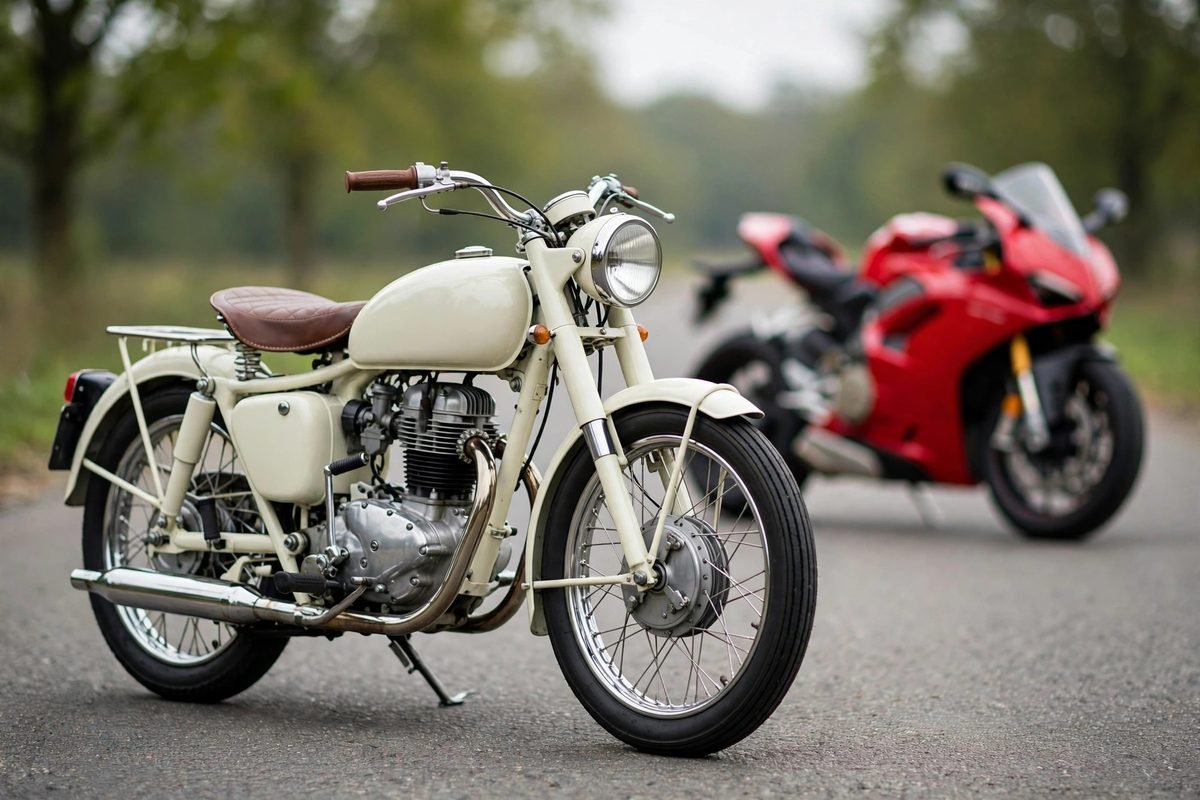
Cars get the headlines, but motorcycles remain Honda’s heartland. It’s the world’s biggest bike manufacturer by an enormous margin, and its range covers everything from the beloved Super Cub to the Fireblade superbike family. Honda’s bikes are the reason many people first learn the brand’s name — and for riders, the brand’s two-wheeled side is worth exploring in its own right, from the beginner-friendly Honda Grom (2026): Complete Buyer’s Guide to the MiniMOTO Street Bike to Honda’s legendary Fireblade superbike, the CBR1000RR.
The engineering culture
Honda’s slogan, “The Power of Dreams,” sounds like corporate fluff until you look at what the company actually builds: business jets, humanoid robots, fuel-cell vehicles, racing engines. Soichiro Honda’s original belief — that engineering exists to make people’s lives better, not just to sell more units — still runs through the company’s products. The cars are the most visible expression of it: clever packaging, engines that sip fuel, controls that feel intuitive the moment you touch them.
Which cars does Honda sell in 2026?
Honda’s 2026 lineup is broader and more electrified than ever, spanning gasoline cars, hybrids, one battery-electric SUV, and one hydrogen fuel-cell model. Here is the full range as Honda lists it for the US market.

Sedans and coupes
- Civic: The compact icon, sold as a sedan and hatchback, with a popular two-motor hybrid version alongside gasoline models.
- Accord: The midsize sedan, now heavily hybrid-focused, offering a spacious cabin and long-distance comfort.
- Prelude: The revived sporty coupe returns as a hybrid, bringing Honda’s heritage performance nameplate into the electrified era.
SUVs and crossovers
- HR-V: The subcompact crossover — practical, efficient, and an easy first SUV.
- CR-V: The family crossover at the heart of the lineup, available as gasoline, hybrid, and even a hydrogen fuel-cell version (the CR-V e:FCEV).
- Passport: A rugged midsize SUV with real off-road attitude, refreshed for 2026.
- Pilot: The big three-row family SUV — comfortable, reliable, and built for long hauls with kids and cargo.
- Prologue: Honda’s first modern mass-market electric SUV for North America — a spacious, quiet, battery-electric midsize crossover.
Truck and minivan
- Ridgeline: The midsize pickup built on car-like underpinnings — famously the most comfortable truck for daily driving.
- Odyssey: The family minivan, still the go-to for parents who prioritize space and practicality above all.
| Model | Body style | Powertrains | Best for |
|---|---|---|---|
| Civic | Compact sedan/hatchback | Gasoline, hybrid | Commuters and first-time buyers. |
| Accord | Midsize sedan | Gasoline, hybrid | Comfortable long-distance driving. |
| Prelude | Sport coupe | Hybrid | Enthusiasts wanting a fun hybrid. |
| HR-V | Subcompact SUV | Gasoline | Easy city-friendly SUV. |
| CR-V | Compact SUV | Gasoline, hybrid, fuel cell | Families wanting the sweet spot. |
| Passport | Midsize SUV | Gasoline | Adventure and towing. |
| Pilot | Three-row SUV | Gasoline | Large families. |
| Prologue | Midsize electric SUV | Full electric | Going electric without fuss. |
| Ridgeline | Midsize pickup | Gasoline | Comfortable everyday truck. |
| Odyssey | Minivan | Gasoline | Maximum family practicality. |
The theme across the range is refinement rather than revolution. Civic and Accord continue to anchor the sedan side, the CR-V remains the center of the SUV universe, and electrification is now woven through everything — the Prologue and CR-V e:FCEV give Honda two very different zero- and low-emission paths in the same market.
How good are Honda’s hybrids and EVs?
Honda was cautious about electrification for years — but in 2026, the strategy has clearly matured. Rather than betting everything on one technology, Honda offers several parallel paths, which turns out to be a sensible answer for different kinds of drivers.
The two-motor hybrid system
Honda’s hybrid lineup centers on a two-motor system paired with a 2.0-litre Atkinson-cycle engine (in the Accord, CR-V, and Civic hybrids, plus the revived Prelude). The electric motors deliver instant low-speed torque and better fuel economy, while the gasoline engine handles sustained cruising. These are “self-charging” hybrids — you never plug them in, you just fuel up like a normal car and the system handles the rest. They run on regular unleaded fuel, so there’s no premium-fuel penalty either.
The big advantage is familiarity: nothing about your routine changes, you just visit the petrol station less often. For the majority of drivers, this is the sweet spot — real efficiency gains with zero behavior change. Electrified vehicles made up nearly a third of Honda’s total US sales in 2025, and hybrids are the main reason why.
The Prologue: Honda’s mainstream EV
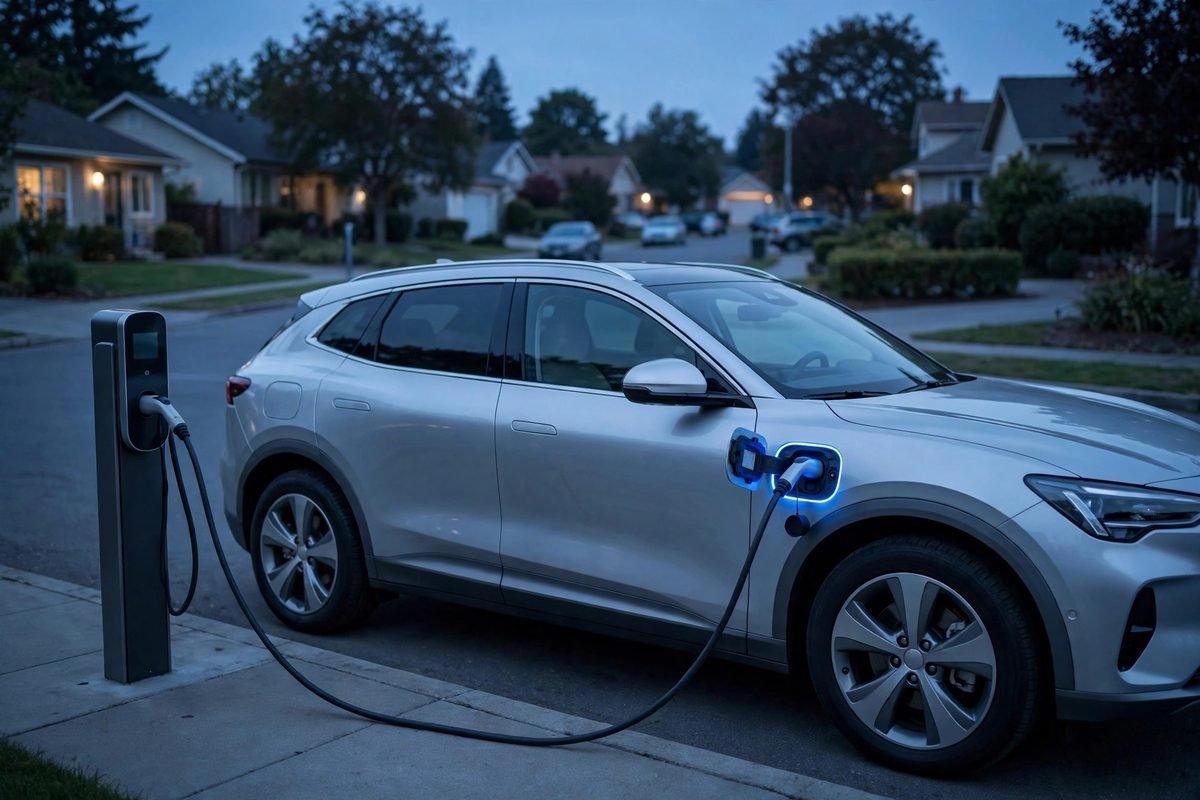
The Prologue is Honda’s first modern mass-market battery-electric SUV for North America. It’s a midsize SUV with a spacious cabin, smooth instant acceleration, and an EPA-estimated driving range that handles both commuting and longer trips. It represents Honda’s attempt to make the EV experience as fuss-free as its gasoline cars: familiar controls, comfortable ride, practical packaging — just with a charging plug instead of a fuel cap.
The CR-V e:FCEV: the hydrogen experiment
The CR-V e:FCEV combines a hydrogen fuel-cell system with a plug-in battery — an unusual pairing that gives drivers short electric-only range for daily use plus hydrogen refuelling for longer trips. It’s a niche product for now, sold in limited markets, but it shows Honda isn’t putting all its eggs in the battery basket. The company that built its name on engines clearly intends to explore every plausible route to low-carbon driving.
How does Honda compare to Toyota and Hyundai?
Honda’s two great rivals define the two ends of its competitive pressure. Toyota is the longtime sparring partner — the other Japanese giant famous for reliability. Hyundai is the rising challenger — offering more features per dollar and an aggressive EV push. Here’s how the three stack up.
| Honda | Toyota | Hyundai | |
|---|---|---|---|
| Reliability reputation | Excellent — top 5 in industry rankings | Excellent — usually #1 | Good and improving, but more variable. |
| Resale value | Very strong (top 3 among mass brands) | Very strong (often #1) | Improving, still trails the Japanese two. |
| Hybrid strategy | Two-motor hybrids across Civic, Accord, CR-V, Prelude | Hybrid leader — widest hybrid range | Strong hybrids and plug-in hybrids. |
| Full EVs | Prologue (mainstream EV), 0 Series coming | Slower EV rollout so far | Aggressive EV lineup (Ioniq family). |
| Driving feel | Sportier, more engaging handling | Comfort-first, dependable | Stylish, feature-rich cabins. |
| Ownership costs | Low — cheap parts, $428/yr average repairs (RepairPal) | Low — similar profile | Good, with a strong warranty. |
Honda vs Toyota
This is the classic matchup. Toyota usually edges Honda in outright reliability surveys, but Honda wins on driving enjoyment — Civics and Accords are widely considered the more engaging cars to drive than their Corolla and Camry counterparts. Ownership costs are similarly low for both. If you want the safest possible bet, Toyota is marginally ahead; if you want reliability plus a car that feels alive on a good road, Honda has the edge.
Honda vs Hyundai
Hyundai competes on value: you typically get more technology, longer warranties, and bolder styling for the same money. But Honda’s advantage is proven long-term dependability — decades of data showing its cars hold up and hold their value. Hyundai’s reliability has improved enormously, yet it remains more variable model to model, and resale values still trail. If features-per-dollar is your priority, Hyundai is tempting; if you plan to keep the car for a decade, Honda’s track record is the stronger argument.
Should you buy a Honda new or used?
This is the question every Honda shopper faces, and Honda makes both routes more attractive than most brands — because its cars age so well, the used market is unusually safe, and because resale values stay high, new cars don’t bleed value as fast as rivals.
Buy new if…
- You want the full factory warranty and the latest safety tech (Honda Sensing driver assistance comes standard across the range).
- You’re after a specific model year or trim — like the revived Prelude or the refreshed Passport.
- You plan to keep the car a long time: Hondas reward long ownership, and a new one gives you the longest runway.
- You’d rather not play detective on a used car’s history.
Buy used if…
- You want the best value: a 3- to 5-year-old Civic or CR-V typically costs far less than new while delivering most of the experience.
- You’re comfortable with a pre-purchase inspection — on a Honda, a clean inspection usually means years of cheap motoring ahead.
- You know which models to target: the Accord and Civic are long-established reliability standouts in both new and used rankings.
Used Honda buying tips
- Check the service history. Regular oil changes are the lifeblood of any engine; gaps in the record are a red flag.
- Get an independent inspection. A mechanic’s once-over before you buy is the best money you’ll spend — Honda parts are cheap, but surprises are still unwelcome.
- Watch for the usual used-car issues — worn tires, neglected brakes, aftermarket modifications — rather than Honda-specific failures, because there aren’t many.
- Verify the paperwork: clean title, matching VIN, no outstanding finance.
How much does it cost to own a Honda?
Honda’s ownership story is one of its strongest selling points, and it’s built on three pillars: low repair costs, strong resale, and fuel efficiency.
- Repairs: RepairPal rates Honda 4.0/5.0 — first out of 32 brands — with average annual repair costs of $428 versus an industry average of $652.
- Resale: Honda ranks among the top mass-market brands for holding its value — typically second or third behind Toyota — which lowers your effective cost of ownership when you eventually sell.
- Fuel: Honda’s hybrids run on regular unleaded and deliver the kind of economy that makes the fuel savings tangible within the first year. Even the gasoline models are tuned for efficiency rather than showy horsepower.
Insurance tends to be reasonable too, since insurers reward reliable vehicles with lower premiums. Put it all together and the total cost of ownership — what you actually spend over five years — is among the lowest in the business for a mainstream brand.
Which Honda is right for you?
With ten models in the 2026 range, the choice comes down to honest answers about your daily life.
- City commuter on a budget? The Civic — the hybrid if you can stretch to it.
- Motorway miles and family comfort? The Accord, especially the hybrid.
- One car for everything? The CR-V — it’s Honda’s best all-rounder for a reason.
- Three kids and a dog? The Pilot or Odyssey, depending on whether you want SUV style or minivan practicality.
- Weekend adventures and towing? The Passport or Ridgeline.
- Ready to go electric? The Prologue — or wait and see how Honda’s next-generation EVs develop.
- Something fun that sips fuel? The new Prelude hybrid.
Whatever you choose, the brand’s promise travels with it: a well-engineered machine that won’t surprise you with repair bills. That’s the Honda formula, and after more than 75 years, it still works.
Frequently Asked Questions
Is Honda a Japanese company?
Yes. Honda Motor Co., Ltd. is a Japanese multinational headquartered in Tokyo. It was founded by Soichiro Honda and Takeo Fujisawa in Hamamatsu, Japan, and incorporated in 1948. Honda operates manufacturing plants across Asia, North America, Europe, and South America, and builds most of the vehicles it sells in the US in North America.
What is Honda most famous for?
Reliability above all — cars like the Civic, Accord, and CR-V are famous for running for hundreds of thousands of miles with modest maintenance. Honda is also the world’s largest motorcycle manufacturer (since 1959), the maker of the Super Cub — the most produced motor vehicle in history — and an engineering-led company behind innovations from the CB750 superbike to the ASIMO robot and the HondaJet.
Is Honda more reliable than Toyota?
Both are among the most reliable brands in the industry, but Toyota usually ranks slightly ahead in major surveys like Consumer Reports. Honda typically places in the top five, and its repair costs are among the lowest tracked — RepairPal ranks it first out of 32 brands. The practical difference between the two is small; Honda’s edge is that its cars are often more engaging to drive.
Does Honda make electric cars?
Yes. The Prologue is Honda’s current all-electric SUV for North America, and the lineup also includes the hydrogen fuel-cell CR-V e:FCEV. Honda’s bigger electrification bet for now is hybrids — two-motor hybrid versions of the Civic, Accord, CR-V, and Prelude — which made up the bulk of the nearly one-third of Honda’s 2025 US sales that were electrified.
What is the cheapest Honda to buy?
Trim levels and pricing change by model year and market, so always check current dealer prices rather than old articles. Historically, the Civic has been the most affordable way into the brand, followed by the HR-V among the SUVs. Because Hondas hold their value well, even used examples command strong prices — shop around and compare against current listings.
Are Honda hybrids reliable?
Honda’s hybrid powertrains are among the most proven in the industry — the two-motor system has been refined over several generations, and hybrid versions of the Accord and CR-V carry the same dependability reputation as the gasoline models. They run on regular unleaded fuel and require no plugging in, which also keeps ownership simple.
Where are Honda cars made?
Honda builds cars on several continents, with major manufacturing in Japan, North America, and elsewhere. In 2025, around 99% of Honda vehicles sold in the US were made in North America, with about 62% made in America — including the long-running plant in Marysville, Ohio, where Honda became the first Japanese automaker to build cars in the US back in 1982.
Conclusion
Honda is one of those rare brands that needs no introduction — yet rewards a closer look. From Soichiro Honda’s post-war bicycle engines to the Super Cub that put the world on two wheels, from the Civic that redefined the affordable car to the Prologue that’s carrying the badge into the electric age, the thread has never changed: build clever, honest machines that last, and people will come back for decades.
If you’re shopping in 2026, the lineup gives you a Honda for almost every life — a commuter, a family hauler, an adventure rig, or a first EV. Just match the car to your actual daily driving, check its history if buying used, and enjoy the particular peace of mind that comes from a brand whose reputation was earned one reliable mile at a time.
Read Also: What Causes a Lunar Eclipse? (Explained Simply, Guide 2026)

3 Comments