
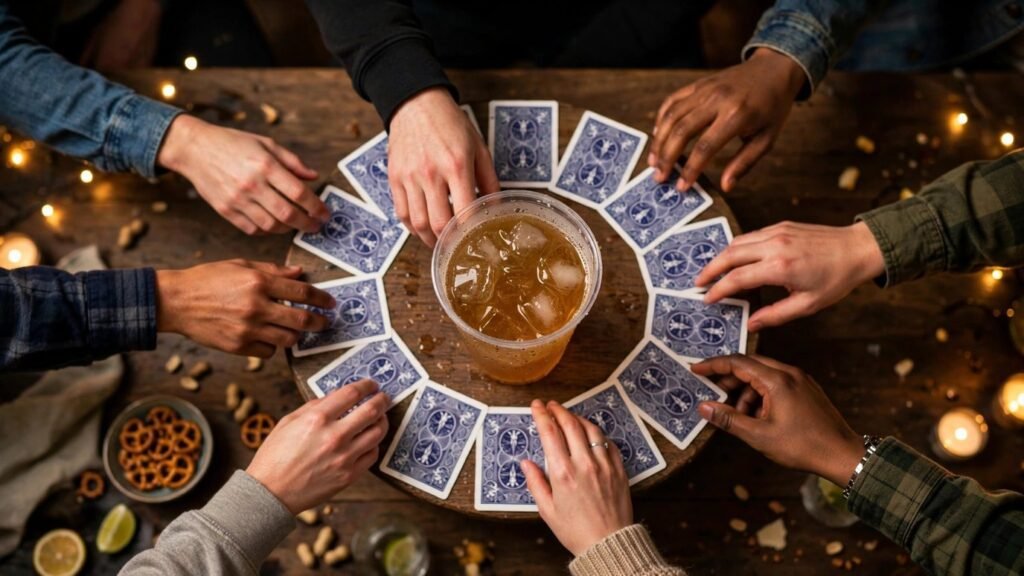
Kings Cup is one of those games that almost everyone has played at least once, usually at a party, usually with someone explaining the rules on the fly and getting half of them wrong. It is simple to learn, endlessly adaptable, and responsible for more game-night laughter than just about any other card game. Here are the rules for kings cup game, explained in full.
It is also known by several other names — Ring of Fire, Circle of Death, and just Kings — and the rules vary a little from group to group. That is part of the charm. But underneath the variations, there is a solid core game that works every time, and this guide covers it completely: the setup, the turn structure, what every single card means, how the game ends, and the most popular variations so you can play it your way.
The short answer: Kings Cup is played by spreading a deck of cards face down in a circle around a large cup. Players take turns drawing a card and following its rule. The first three kings drawn mean the player pours some of their drink into the center cup; the player who draws the fourth king must drink the whole cup, and the game ends.
What You Need to Play
Kings Cup does not ask for much, which is one reason it has stayed popular for decades:
- One standard deck of 52 playing cards. Jokers are optional and usually left out, though some groups give them a special rule.
- A large cup or mug for the center. This is the King’s Cup itself. It should be big enough to hold a meaningful amount of liquid by the end of the game.
- A drink for each player. Traditionally this is an alcoholic drink, and the game is meant for adults of legal drinking age. It works just as well with soda, juice, or water, and a non-alcoholic version is a perfectly good way to include everyone.
- A flat surface. A table works best, since the cards need to stay in a neat circle.
- Three or more players. The game works with as few as three, but it really comes alive with four to ten players. Beyond ten, turns get slow and the circle gets crowded, so consider splitting into two games.
That is genuinely all you need. No board, no app, no special equipment — just cards, a cup, and people willing to follow the rules they draw.
How to Set Up Kings Cup
Setup takes about a minute and it matters, because the shape of the circle is part of the game:
- Place the cup in the center of the table. This is the King’s Cup. It starts empty.
- Spread the deck in a circle around the cup. Place all 52 cards face down in a ring, close together, surrounding the cup so that the cards form an unbroken circle. This ring is called the “circle of death” in some versions, and breaking it has consequences (see below).
- Make sure the cards are tight. The circle should be snug, with cards nearly touching. A loose, gappy circle makes the game shorter and less tense.
- Agree on house rules before the first draw. This is the single most important setup step. Decide which version of each card rule you are using, whether breaking the circle ends the game or just costs a drink, and what goes into the King’s Cup. Five minutes of agreement now prevents twenty minutes of arguing later.
- Decide who goes first. Any method works — youngest player, the person who last played a card game, or just pick someone. Play then moves clockwise around the table.
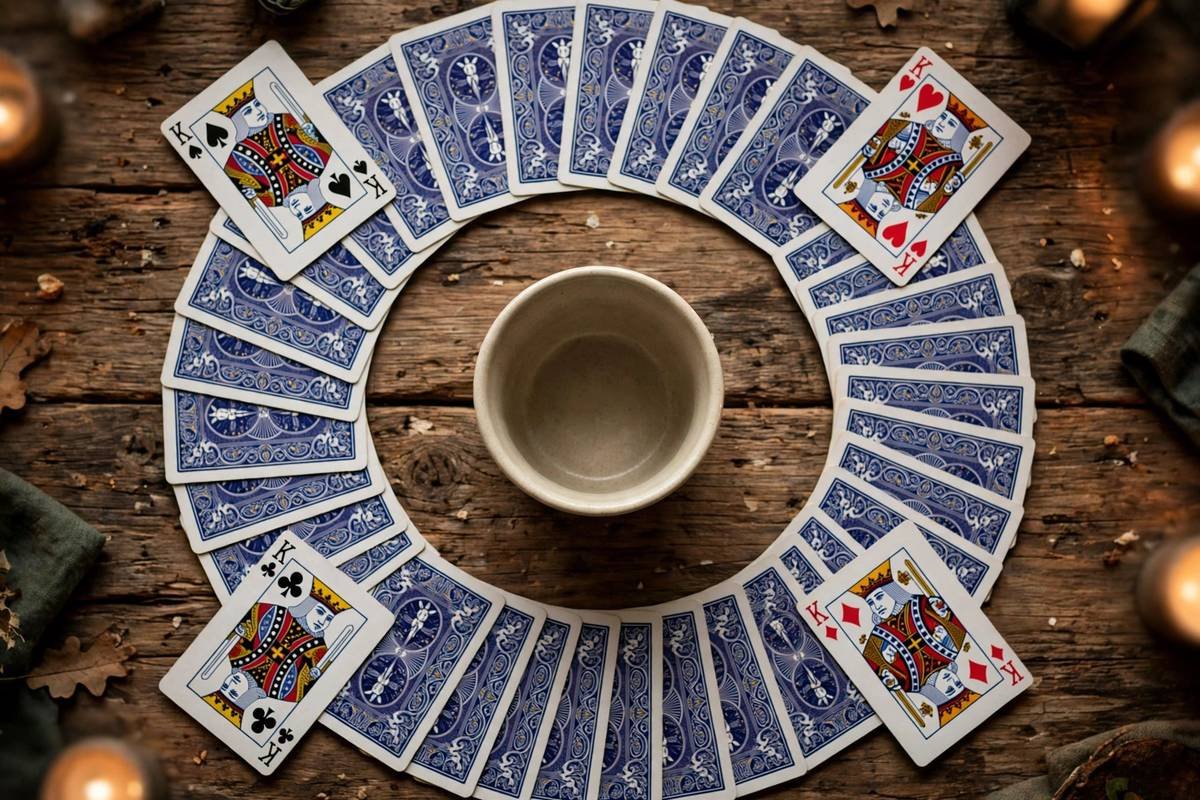
Once the circle is built and the rules are agreed, the game is ready to start.
How a Turn Works
Kings Cup turns are quick, which keeps the game moving:
- On your turn, draw one card from anywhere in the circle.
- Flip it over so everyone can see it.
- Follow the rule for that card immediately.
- Discard the card to a pile off to the side — unless the rules for that card say otherwise.
There is one special rule that applies to every draw: if you break the circle, meaning your draw leaves a gap in the ring of cards, you must drink. In some groups, breaking the circle ends the game entirely, with the player who broke it drinking the King’s Cup. Decide which version you are playing before you start, because it changes how careful people are with their draws.
Play continues clockwise, one card per turn, until the game ends — which happens when the fourth king is drawn, or when the circle is broken if your group plays that version.
Rules for Kings Cup Game: Every Card Rule Explained
This is the heart of the game. Each card value has a fixed action, and everyone at the table should know them. Here is the standard set of rules, the version played most widely:
| Card | Name | What happens |
|---|---|---|
| 2 | You | Point at another player. That player drinks. |
| 3 | Me | You drink. Simple, and always a little unfair. |
| 4 | Floor | Everyone touches the floor as fast as they can. The last person to do it drinks. |
| 5 | Guys | All the guys drink. |
| 6 | Chicks | All the girls drink. |
| 7 | Heaven | Everyone points to the sky. The last person to do it drinks. |
| 8 | Mate | Pick a mate. Whenever you drink, your mate drinks too, for the rest of the game. |
| 9 | Rhyme | Say a word. Going clockwise, each player must say a word that rhymes with it. The first person who fails, repeats, or hesitates too long drinks. |
| 10 | Categories | Pick a category, like “types of dogs” or “car brands.” Going clockwise, each player names something in the category. The first person who cannot answer drinks. |
| Jack | Make a Rule | Invent a rule that lasts until the end of the game. Anyone who breaks it drinks. |
| Queen | Question Master | You become the Question Master. Until someone else draws a queen, anyone who answers a question you ask must drink. |
| King | King’s Cup | Pour some of your drink into the center cup. The player who draws the fourth king drinks the entire cup. |
| Ace | Waterfall | Everyone starts drinking at the same time. You can only stop once the person to your right stops, so the player who drew the ace controls the pace. |
A few of these deserve a closer look, because they are where the game gets interesting.
Jack — Make a Rule is the card that makes every game unique. Common rules include “no saying the word ‘drink,'” “no pointing,” “everyone must drink with their non-dominant hand,” or “you must say ‘cheers’ before drinking.” The rule stays in force until the end of the game or until another Jack replaces it, depending on your house rules. Keep the rules reasonable — the goal is fun, not punishment.
Queen — Question Master is a power role. Once you are Question Master, you can ask anyone anything, and if they answer you, they drink. The classic trick is to ask something casual like “whose turn is it?” and watch someone answer without thinking. The role passes to the next person who draws a queen.
Ace — Waterfall is the great equalizer. Everyone starts drinking together, and nobody can stop until the person on their right stops. Since the player who drew the ace stops first, the waterfall ripples around the table, and the last person ends up drinking the most. It is loud, chaotic, and usually the moment everyone remembers the next day.
King — King’s Cup is the card the whole game builds toward. The first three kings are just contributions: each player who draws one pours a little of their drink into the center cup. The fourth king is the end of the game — that player picks up the cup and drinks whatever has collected inside. In some groups, the cup is only filled by kings, so it stays modest. In others, players add a splash on other cards too, which makes the finale considerably more dramatic.
How the Game Ends
Kings Cup ends in one of two ways, depending on your house rules:
- The fourth king is drawn. The player who draws it drinks the King’s Cup, and the game is over. This is the standard ending and the one most groups use.
- The circle is broken. If your group plays the strict version, the player whose draw breaks the ring must drink the King’s Cup, and the game ends immediately — even if no kings have been drawn yet.
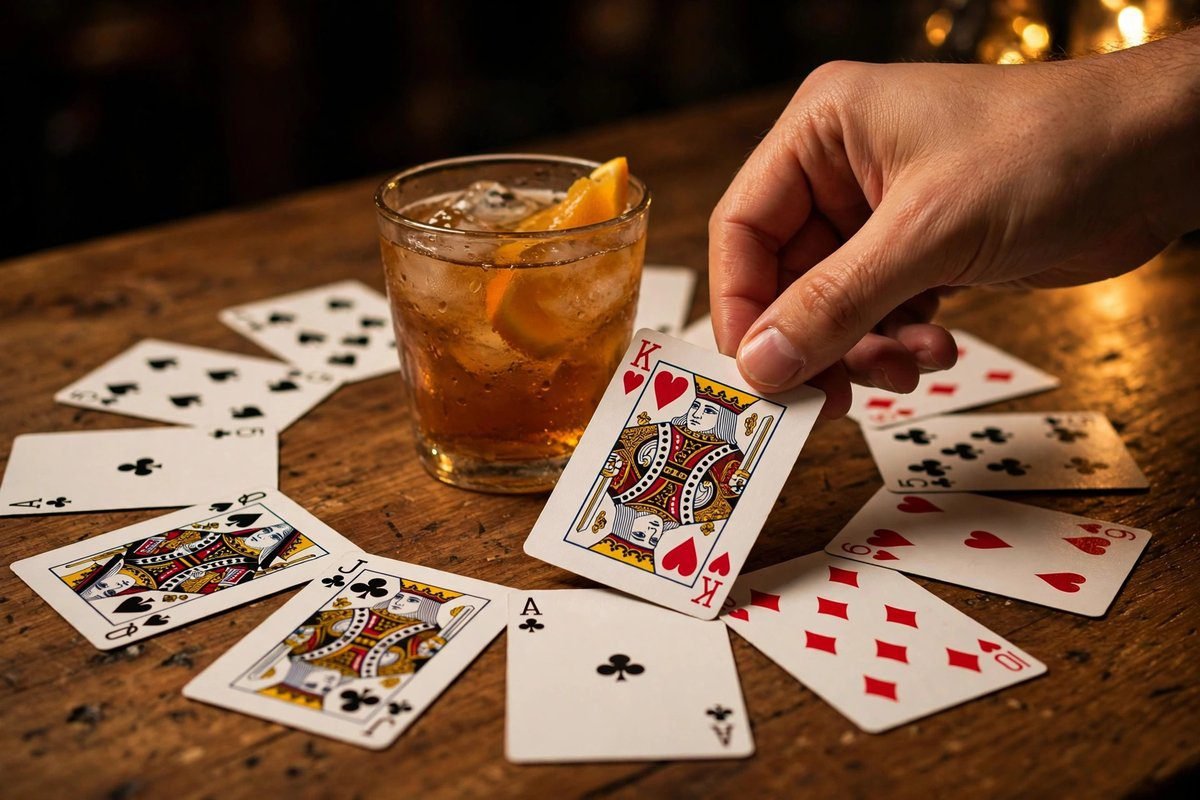
After the game ends, most groups reshuffle and play again. The second game is usually faster, louder, and played with considerably more confidence about the rules.
Popular Variations
Part of Kings Cup’s staying power is how easily it adapts. Here are the most common variations you will encounter:
- Ring of Fire rules. In this version, the card meanings are slightly different, and breaking the circle always ends the game. The name comes from the ring of cards around the cup.
- Different card assignments. Some groups swap rules around: 5 becomes “never have I ever” (everyone puts up three fingers and takes turns saying things they have never done; players who have done it put a finger down, and the first to run out drinks), 6 becomes “guys drink,” and so on. As long as everyone agrees before the first draw, any assignment works.
- Jokers in the deck. If you include the two jokers, give them a special rule — for example, “everyone drinks” or “the player who draws it makes a new rule.” Jokers add surprise, but they also add two more cards to the circle.
- The waterfall variation. Some groups play the Ace as “waterfall” starting from the player who drew it and going in the direction of play, rather than the right-hand rule described above. Both versions work.
- Non-alcoholic Kings Cup. Replace drinks with soda, juice, or water, and replace “drink” penalties with silly forfeits like doing an impression or answering a trivia question. This version is great for mixed-age game nights and anyone who does not drink.
- Speed Kings. In this faster variant, the circle is smaller because half the deck is removed before play, so the game wraps up in about twenty minutes instead of forty-five. Good when you have limited time or a large group.
Whatever variation you choose, write nothing down — the tradition is that the rules live in the group’s memory, which is exactly why they drift a little every time. That drift is part of the fun.
Tips for a Great Game Night
A few practical tips make the difference between a good game of Kings Cup and a great one:
- Agree on the rules first. It bears repeating: five minutes of agreement saves the whole evening. Go through the card list out loud before dealing.
- Pace yourself. The game rewards steady play, not heroic drinking. The King’s Cup at the end is the only big moment, and everything before it should be fun, not a race.
- Keep the circle tight. A neat, tight ring of cards lasts longer and builds more tension as it slowly shrinks.
- Play with water on the side. Having water available is just sensible, and it keeps everyone in the game longer.
- Know when to stop. If someone has had enough, let them switch to a non-alcoholic drink or sit out the drinking penalties. The game is supposed to be fun for everyone at the table.
- Protect your cards. Spilled drinks and playing cards do not mix. A cheap deck you do not mind ruining is the right choice for Kings Cup.

Playing Responsibly
Kings Cup is a drinking game, so a quick word on responsibility is in order. Only play the alcoholic version if everyone at the table is of legal drinking age in your area. Make sure nobody drives after playing — arrange rides, a designated driver, or a place to stay before the game starts. Keep food and water available, and respect it immediately if someone says they are done. A good host makes sure the game ends with everyone laughing, not regretting it.
If you are playing with people who do not drink, the non-alcoholic version is not a lesser version — it is the same game, with the same jokes, the same surprise rules, and the same dramatic fourth king. The cards do the work, not the drinks.
Kings Cup FAQs
How many players do you need for Kings Cup?
You need at least three players, but the game is best with four to ten. With fewer than four, the mate and categories rules lose some of their fun, and with more than ten, turns slow down.
What happens when you draw a king in Kings Cup?
You pour some of your drink into the center cup. The first three kings just add to the cup. The player who draws the fourth king must drink the entire contents of the cup, and the game ends.
What does each card mean in Kings Cup?
The standard rules are: 2 You, 3 Me, 4 Floor, 5 Guys, 6 Chicks, 7 Heaven, 8 Mate, 9 Rhyme, 10 Categories, Jack Make a Rule, Queen Question Master, King King’s Cup, Ace Waterfall. Groups often adjust individual cards as house rules.
What is the difference between Kings Cup and Ring of Fire?
They are essentially the same game under different names. Ring of Fire is the more common name in the UK, while Kings Cup is more common in the US. The card meanings vary slightly between groups, but the core game — a circle of cards around a cup, with the fourth king ending it — is identical.
Can you play Kings Cup without alcohol?
Absolutely. Use soda, juice, or water, or replace drinking penalties with forfeits like impressions, trivia questions, or silly dares. The game works just as well and is suitable for any age group.
How long does a game of Kings Cup take?
A typical game takes 30 to 45 minutes, depending on the number of players and how long the card actions take. Using half a deck speeds it up to about 20 minutes.
What do you put in the King’s Cup?
Each player who draws a king pours a little of their own drink into the center cup. By the fourth king, the cup holds a mix of whatever everyone was drinking, which is exactly why drawing that last king is so dramatic.
Final Thoughts
Kings Cup has survived for decades without an official rulebook, a publisher, or an app, and that is probably the best evidence that its rules work. A deck of cards, a cup, and a circle of friends are all it takes. Learn the standard card meanings, agree on your house rules before the first draw, and let the game do what it has always done: turn an ordinary evening into a story everyone retells the next day.
And if you draw that fourth king — well, you knew the risks when you sat down. Cheers.
Read Also: USCIS Status Check: How to Track Your Case Online

1 Comment